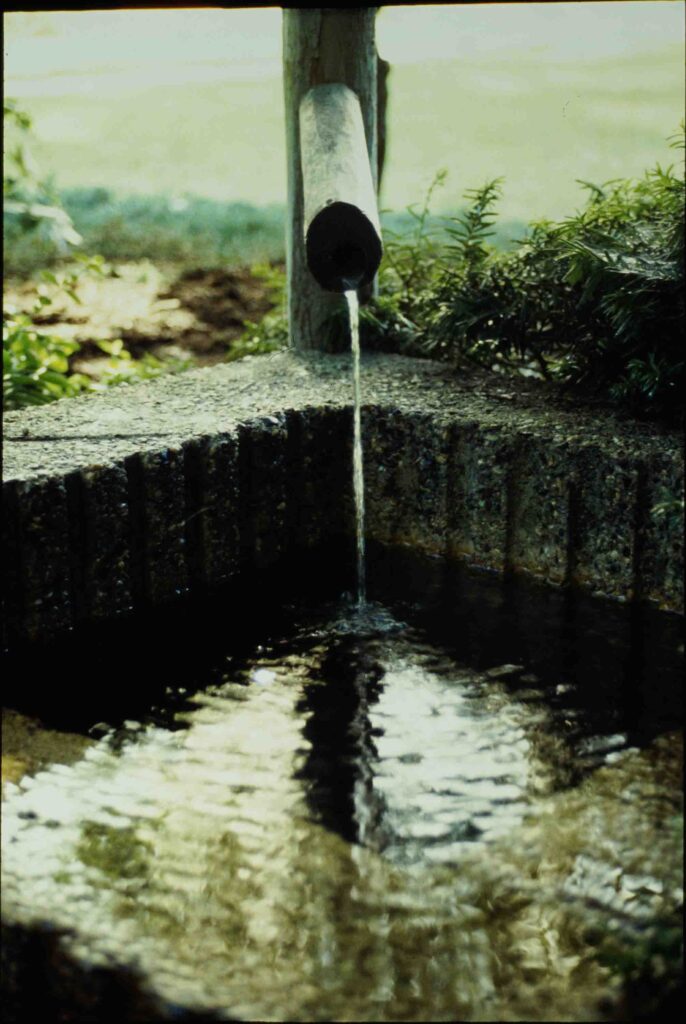
The tsukubai washbasin is a small water-retaining structure located near the western entrance to the Japanese garden, right next to the kusaga stone lantern. The washbasin is meant to give visitors a chance to wash their hands and mouths — particularly before a tea ceremony.
I believe the process of photogrammetry allows us to look more intricately at an object in its entirety. That being said, I believe how one models an object has a lot in conjunction with what a viewer is able to take away from the model. If a designer takes the time to make a high-quality 3D model, then perhaps there will be details more apparent t in the model than in real life which viewers can pay closer attention to. If the model is produced at a lower resolution, then the viewers will only have the most basic understanding of the entire object.
I think the process from going to a passive observer to a modeler of objects on campus has made me look at all of the little things on campus and understand how much time went into building them up: benches, streetlights, landscaping, and a host of other items all have intricacies which no one may know about if they just briefly glance at them. I also believe that photogrammetry has developed a new interest within me: the desire to take photos of my favorite things on campus and make models out of them — perhaps I can find something new in them.
Max, I think you raise a good point that modeling makes you more attentive to how much work has gone into all of the objects around us. We often overlook the details in everyday things, but modeling asks us to pay attention to smaller details. I am curious to see which objects you would chose to model around campus? What makes them stick out to you?
I found the argument that the quality of the model influences the message the viewer will get out of it to be very interesting. Also, I thought it was a good idea for you to touch upon the topic of how photogrammetry altered your perspective of the ordinary things on campus. One easily passes by benches, streetlights, etc. not paying attention to the details of their design.
I agree entirely that it is super important to consider not just the way in which a model is constructed, but the quality of the model in the first place. It does not matter at the end of the day if a model is made super intentionally if the quality of the model is just bad. I also shared your experience of realizing just how much detail ubiquitous objects around campus really have!