It’s in translation. I can’t read German. I’m sorry.
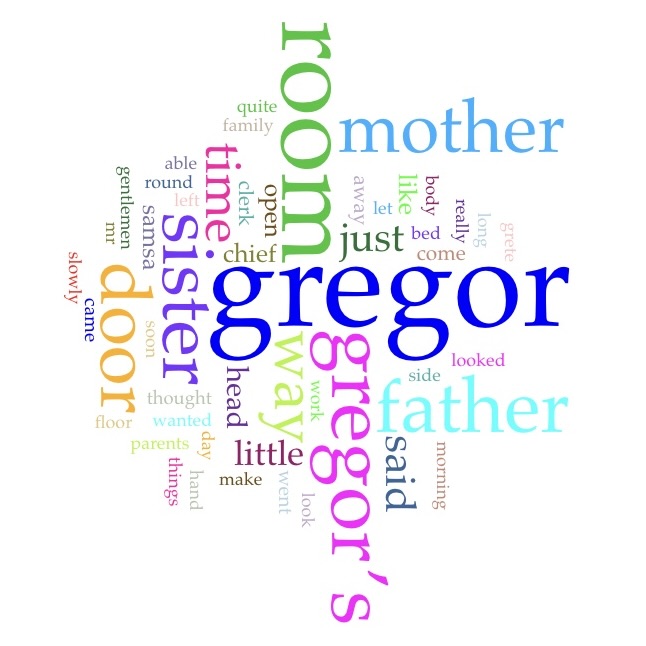
I started by importing the raw text into Voyant Tools and poking around to see what I could find out. I found the word cloud interesting, but I was especially curious about how the word frequencies change over the course of the book, if at all. There was a tool that graphed some of this, but it split the text into ten parts, and I thought that it would be more meaningful to split it into Part I, Part II, and Part III the way they are laid out in the book.
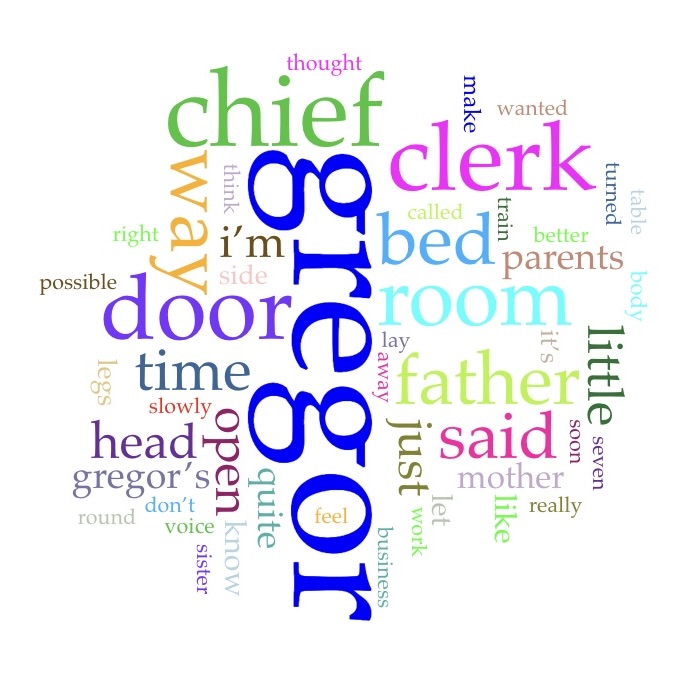
I expected to see most of the words I saw in the word cloud for the whole text, such as Gregor, room, and door. I was also expecting to see body part words because of how often Kafka describes how Gregor moves about his environment. These words actually came up less than I was expecting, but head and body did make an appearance.
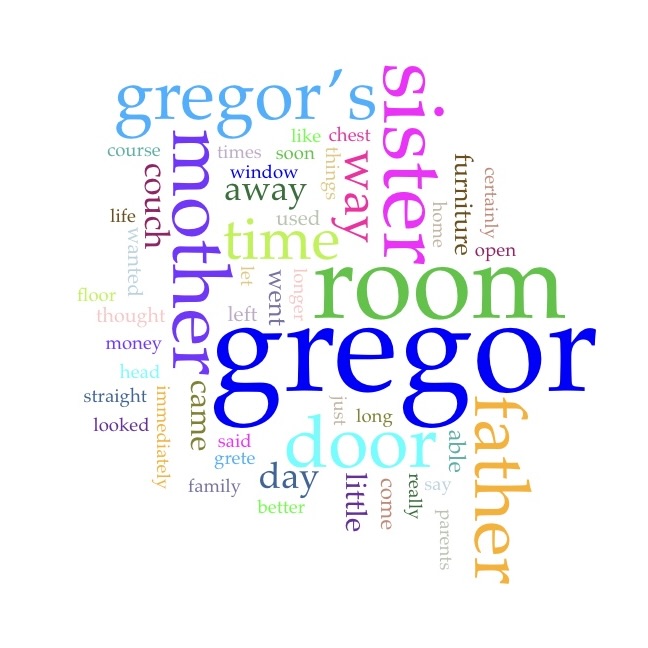
I most likely could have gotten these results faster with AI. It could have pointed out how many fewer times Gregor’s name is mentioned in the third part compared to the others, and perhaps could have even drawn a conclusion about the book based on that. But what is the point of analyzing something if you’re not going to do it yourself?
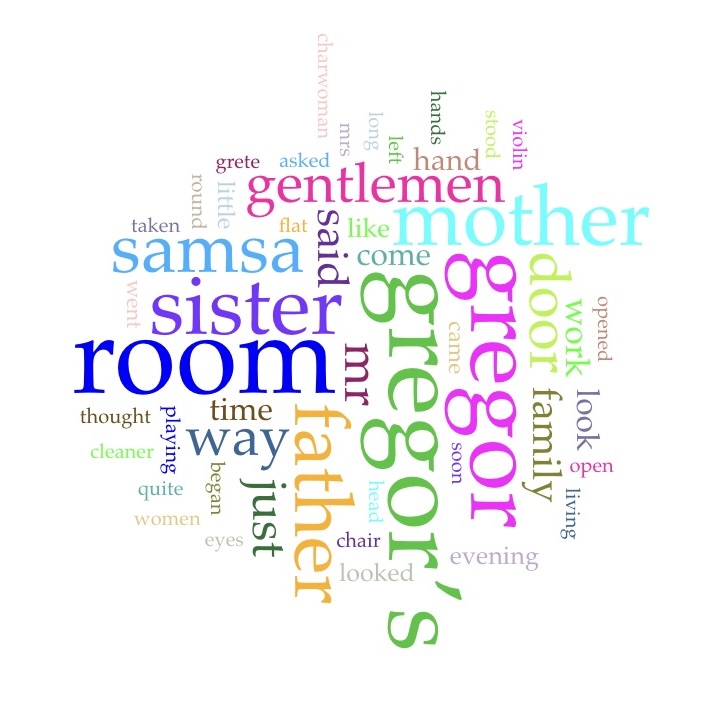
Because I have read the Metamorphosis (though not this specific translation) I have emotional context for the data I’m seeing. AI does not. AI does not understand what sadness is to humans. AI cannot sympathize with a man who has been ground down to nothing by both society and his own family, and that is why AI should not be in charge of analyzing literature with that very theme. This data is nothing without the very context that AI lacks. It should be interpreted by humans because it concerns the human experience. Why should we outsource a representation of life to something that is not alive?
Hi Sabrina, I really liked your point about the importance of emotional context when analyzing data. It’s often easy to interpret data very empirically and while AI is being trained to respond more empathetically, there’s definitely an emotional disconnect. Something valuable is lost when human experience is interpreted by a machine and I can see this affecting social relations as well.