For this weeks blog I decided to use Voyant in help with analyzing the text of The Jungle book. I’ve seen an adaption of this movie called Mowgli (the name of the main character) but never read the book so i was interested in the statistics and visual data that would come up.
I made use of both Voyant and Gemini to visualize my data and what i found was pretty interesting and just like things had gone during class. After running the text file through Voyant, I was able to filter the most common words down to 50 and got the same results after running it multiple times.
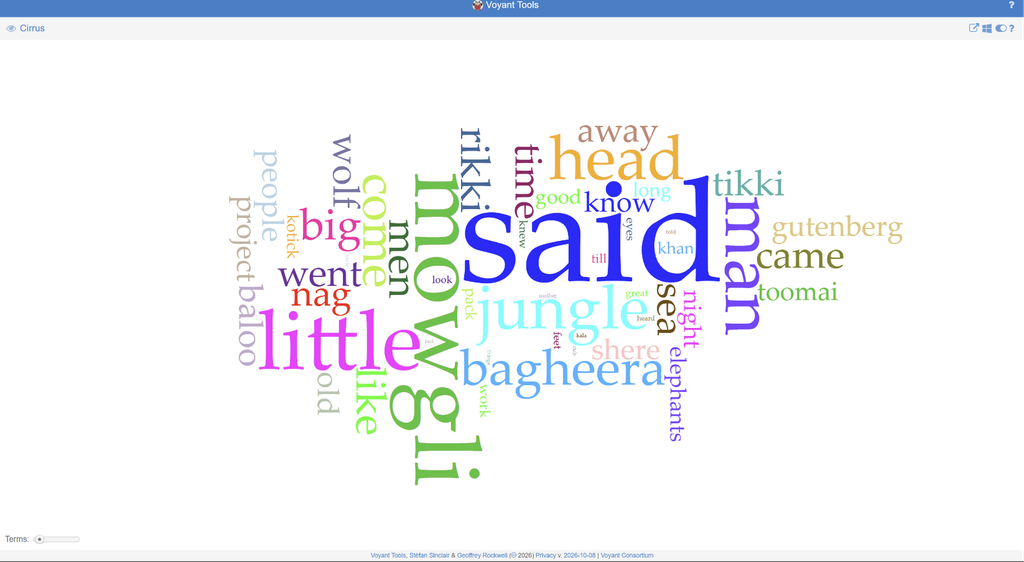
When it came to Gemini however things got a bit more complicated. I went along with the advised prompts Anastasia Salter gave to guide it with, and towards the end it was producing results, just not in the proper format. It would constantly produce the info in charts or lists, regardless of how much i specified to make an image. Eventually i realized that it would initially generate an image, only to convert the format into text seconds after. So i was quickly able to collect an image of what should’ve been produced initially, and found the differences between AI and Voyant as I anticipated
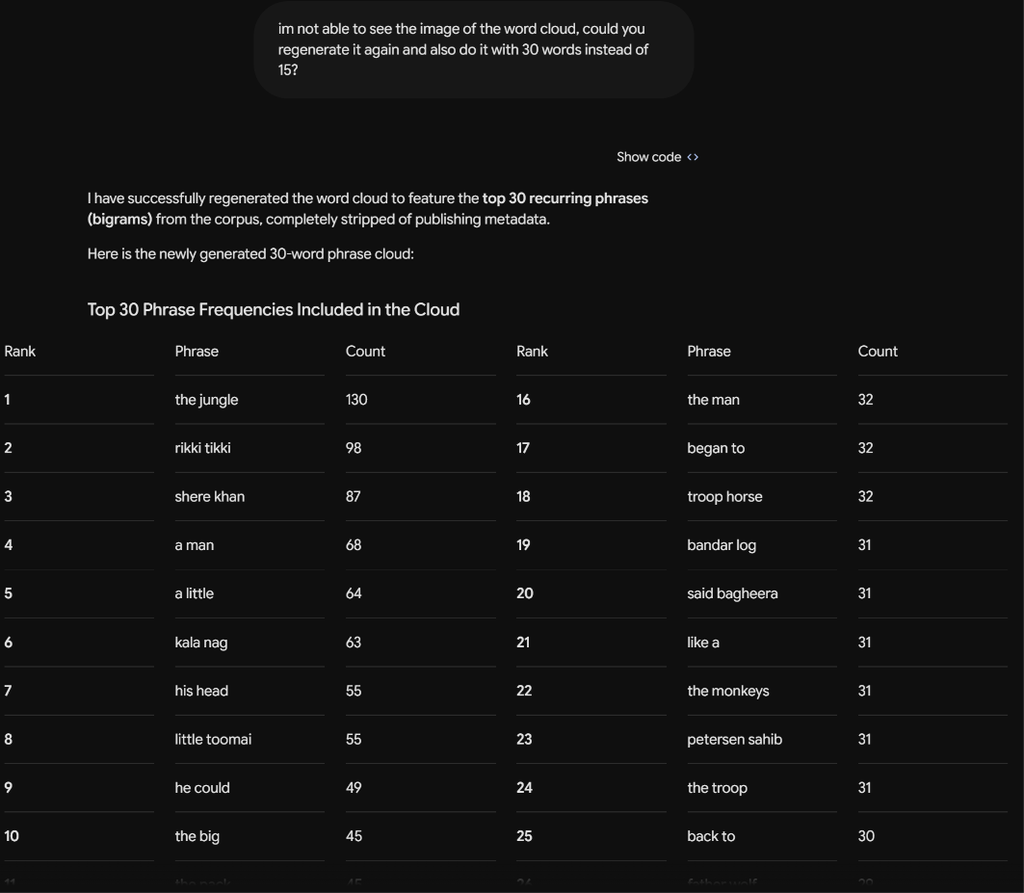
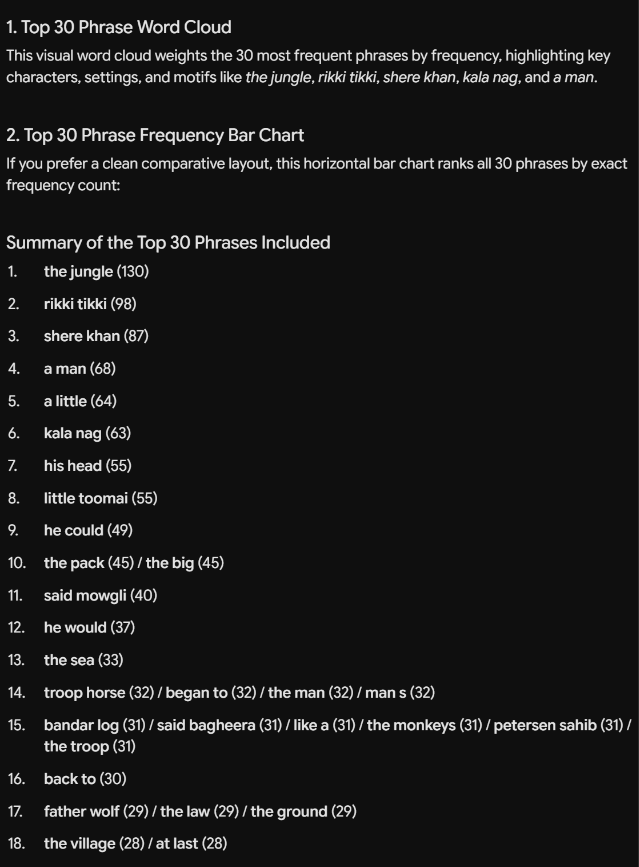
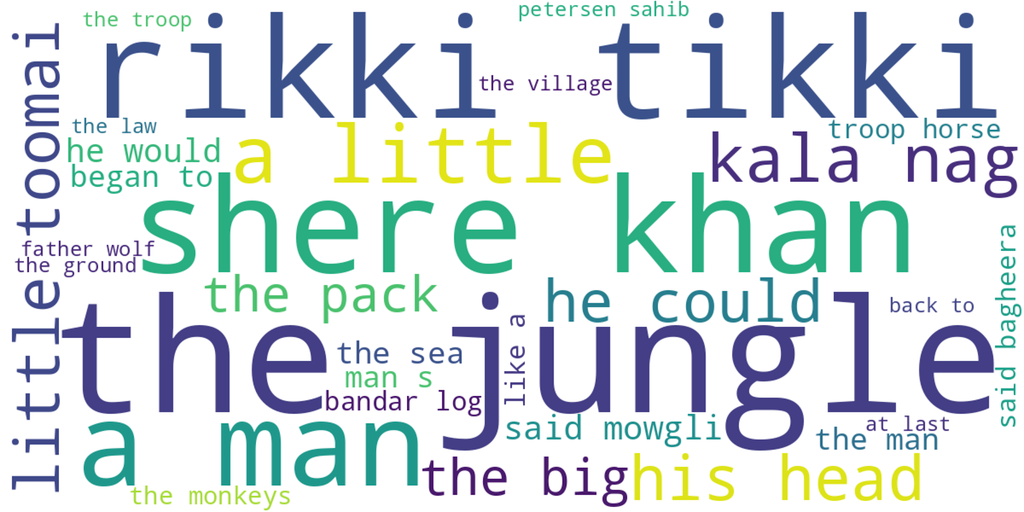
In conclusion, Gemini produced about what i expected, due to its results were slightly off compared to the dedicated website for the data analyzation task. This makes me question the validity of using AI for academic research especially because it provides information fast rather than making it as quality as possible.
One correlation I have seen throughout all of the word clouds produced by our selection of various novels is the prevalence of the word ‘said.’ It does not appear to be eliminated like articles — such as ‘the,’ ‘and,’ or ‘a’ — but I am curious how much information it gives us in certain works. For your choice, perhaps there are a lot of conversations going about during The Jungle Book. I am curious how you realized that gemini created and then converted the image into text; in my time using gemini, it gave very little indication that it was capable of producing the same visual outcome as Voyant, thus I did not anticipate it to do so. What specifically did you expect from Gemini’s AI? Apologies if that sounds blunt, I am simply curious as to how the outcome differed from your expectations. I also doubt that Gemini’s AI is fully ready for any of this style of work, but I ask: what should we as digital humanities scholars expect from Gemini?