AI is gradually becoming an important part of our lives today. Its functions are so powerful that AI can achieve things in almost every field that we once thought were “impossible,” and computer vision is a huge part of this. Today, many AI tools can directly generate images, adjust or edit existing pictures, repair damaged photos, and colorize old photos. Below is my exploration using an old photo from the Carleton scrapbook and AI colorization.

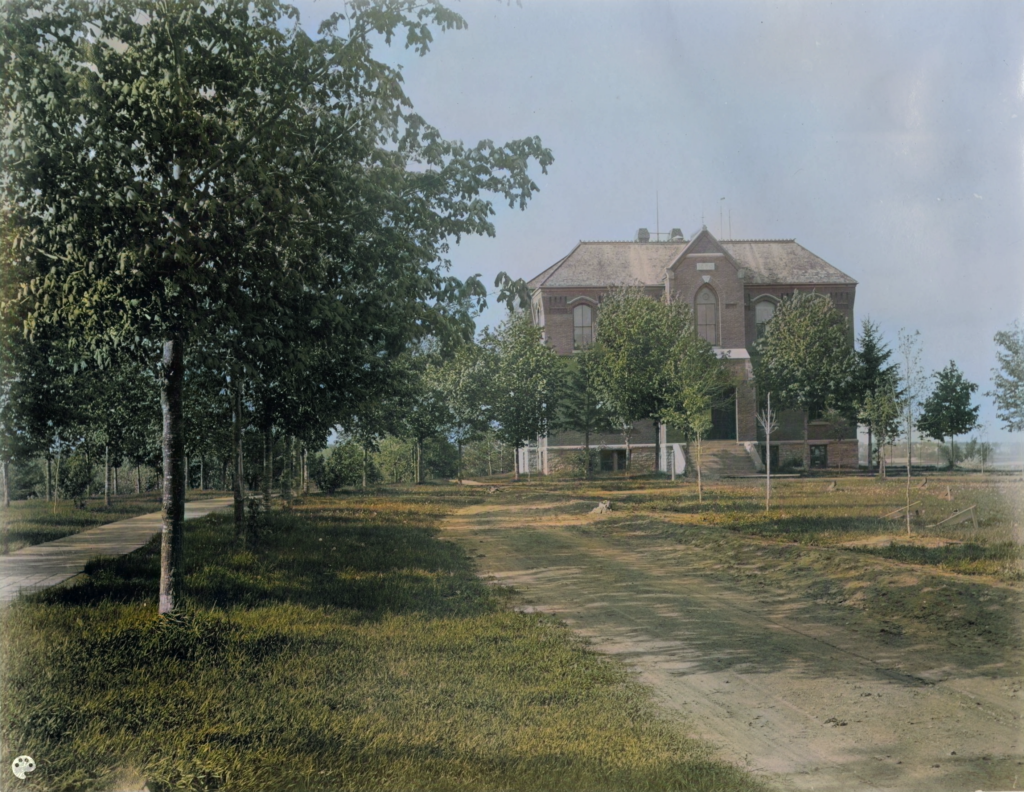
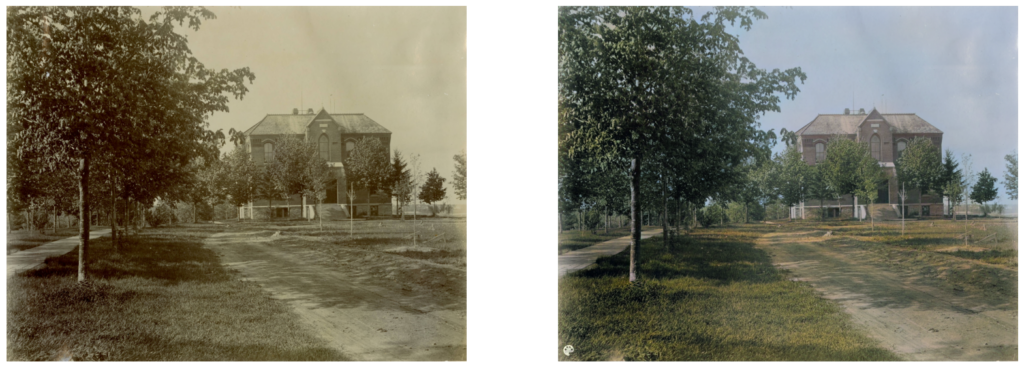
Based on the results, the AI tried its best to restore the possible original colors of the photo based on color brightness, contrast, and machine learning results. To some extent, this shows that AI plays a big role in photo and visual restoration. Similarly, I have seen people online use AI to restore damaged photos of deceased family members, or even combine voice and photos to generate videos, helping people bring back memories of their loved ones. At the same time, this color and photo restoration technology is very useful for historical restoration. Therefore, I think this technology is meaningful.
However, this technology also comes with some ethical concerns. First, the output of AI vision models relies on models trained on datasets, which means their output heavily depends on the input datasets and the trainers. This easily introduces trainer bias. For example, as we mentioned in class, if an AI is trained mostly on pictures of white people, it tends to colorize the black-and-white photos of Black people to have a lighter skin tone. As Sonja Drimmer mentions in How AI is Hijacking Art History11, when discussing art philosophy and scientists:
“But it illustrates the problem of art and history becoming toys in the sandboxes of scientists with no training in the humanities.”
When technical people without a humanities background treat history and art as a data playground, they often just create superficial sensations. Drimmer also says:
“They have not, in actuality, revealed one secret or solved a single mystery. What they have done is generate feel-good stories about AI.”
This also points out that during photo restoration or colorization, AI is not really “recreating” facts. Instead, it guesses facts based on the information it already has. These contents are not necessarily correct, and if you ask it to generate again, it will output different results. Therefore, AI photos cannot and do not have the credibility to serve as reliable historical evidence or absolute facts, because they only guess possibilities based on what is already known.
- Sonja Drimmer, How AI is Hijacking Art History, The Conversation ↩︎