Ethical issues: artificial intelligence and image manipulation
AI can often be unpredictable and make mistakes, such as unwanted changes to an image. The fact that colorizing images through AI use is completely free and relatively easy poses several risks. For example, anyone can colorize an image, which could manipulate someone into believing a photograph is more recent than it actually was. There’s also a chance of AI misconstruing the image with the wrong colors since there’s no way to know what the original colors were. In addition, anyone can use AI to spread their own agenda by creating fake images that are becoming increasingly difficult to tell apart. Drimmer, author of the article “How AI Is Hijacking Art History” has an important quote that emphasizes the impact of using AI to colorize images.
“But this effort to “bring events back to life” routinely mistakes representations for reality. Adding color does not show things as they were but recreates what is already a recreation – a photograph – in our own image, now with computer science’s seal of approval.”
Drimmer, Sonja. “How AI Is Hijacking Art History.” The Conversation, https://theconversation.com/how-ai-is-hijacking-art-history-170691. Accessed 11 Oct. 2026.
This quote demonstrates that adding color to images by using AI is unnecessary and unrealistic. AI is unable to colorize an image properly. It simply recreates the image which risks being false. This creates potential confusion amongst the audience. Another significant quote from our readings was stated by Chiang in the article “ChatGPT Is a Blurry JPEG of the Web.”
“[AI] retains much of the information on the Web, in the same way that a jpeg retains much of the information of a higher-resolution image, but, if you’re looking for an exact sequence of bits, you won’t find it; all you will ever get is an approximation.”
Chiang, Ted. “ChatGPT Is a Blurry JPEG of the Web.” The New Yorker, 9 Feb. 2023, https://www.newyorker.com/tech/annals-of-technology/chatgpt-is-a-blurry-jpeg-of-the-web. Accessed 11 Oct. 2026.
This quote emphasizes my point that AI is imperfect. As Chiang states, AI isn’t always right, because it can only approximate information. For instance, it could generate the wrong colors, or be used to completely change the features of an image. This could spread false information, whether purposefully or not.
Original colorized images & Output from distant ViEWING EXPLORER
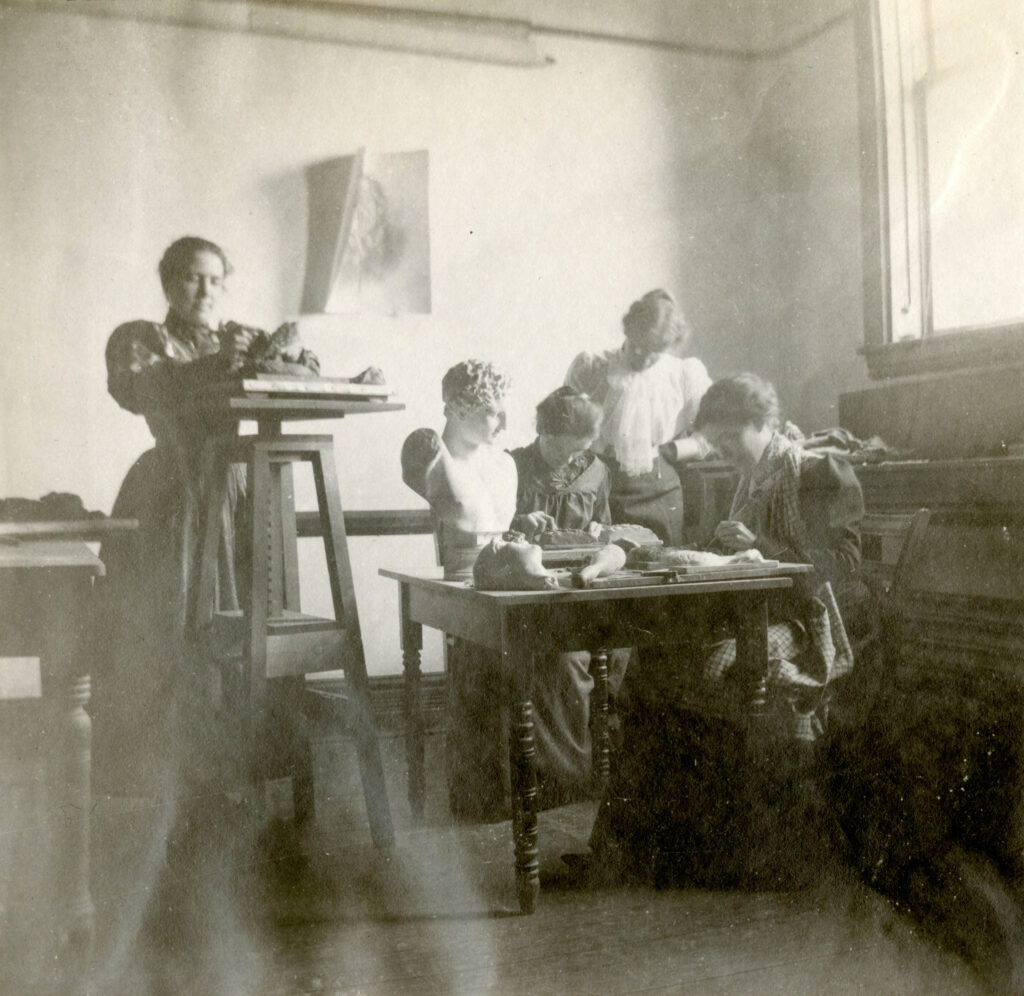
This is the original image.
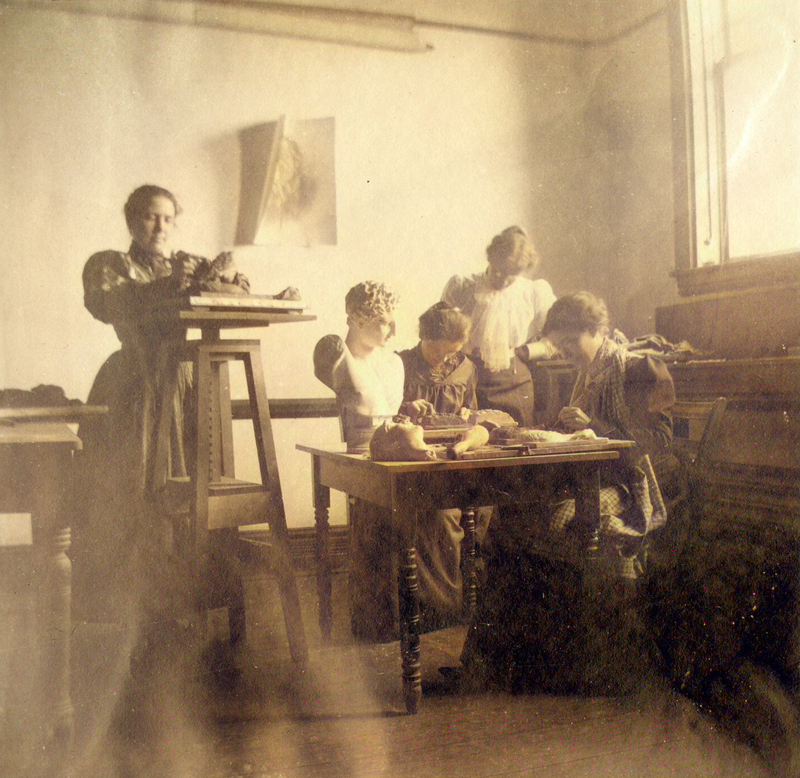
This is the colorized image.
In class, we used the Image Colorizer on DeepAI to colorize our chosen image. I found that the AI did not colorize the image properly. Instead, it shifted the image’s color to a yellow hue. I redid it a few times, and ended up with the same result. This is concerning to me, as this tool does not seem adept in predicting colors.
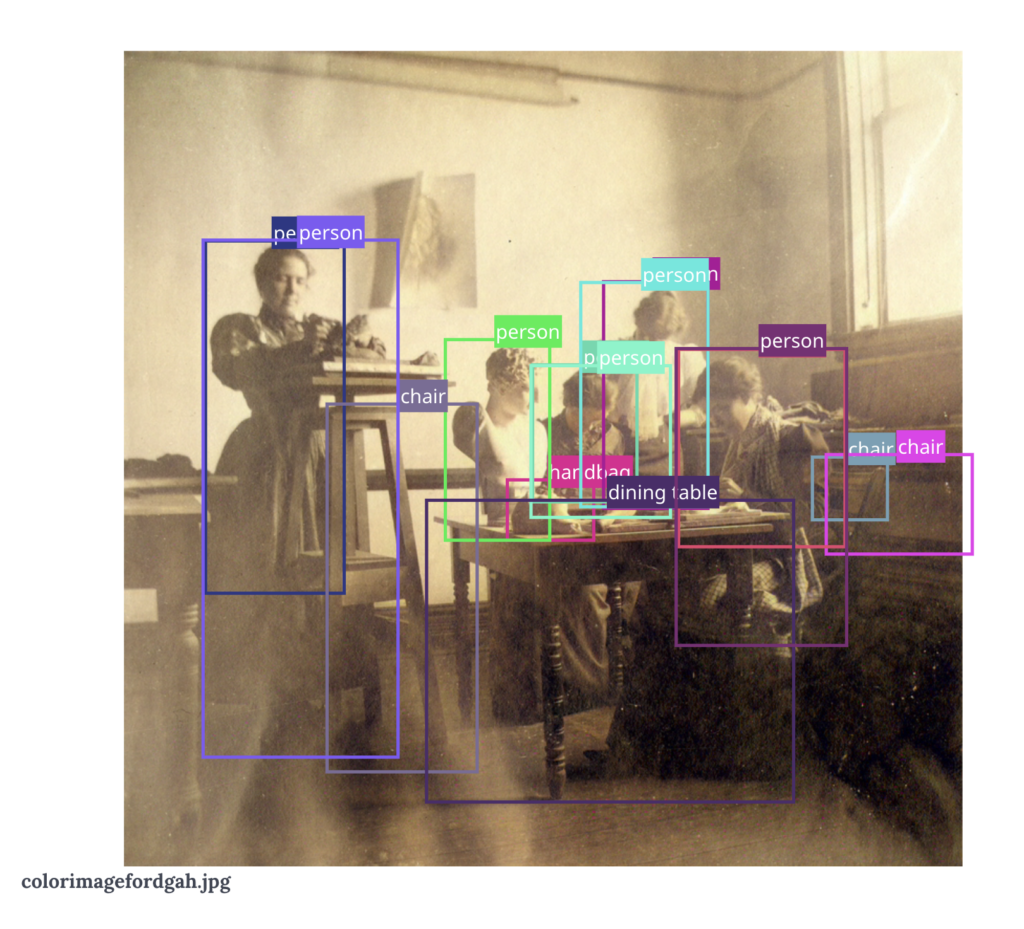
This is an example of the object detection feature on Distant Viewing Explorer.
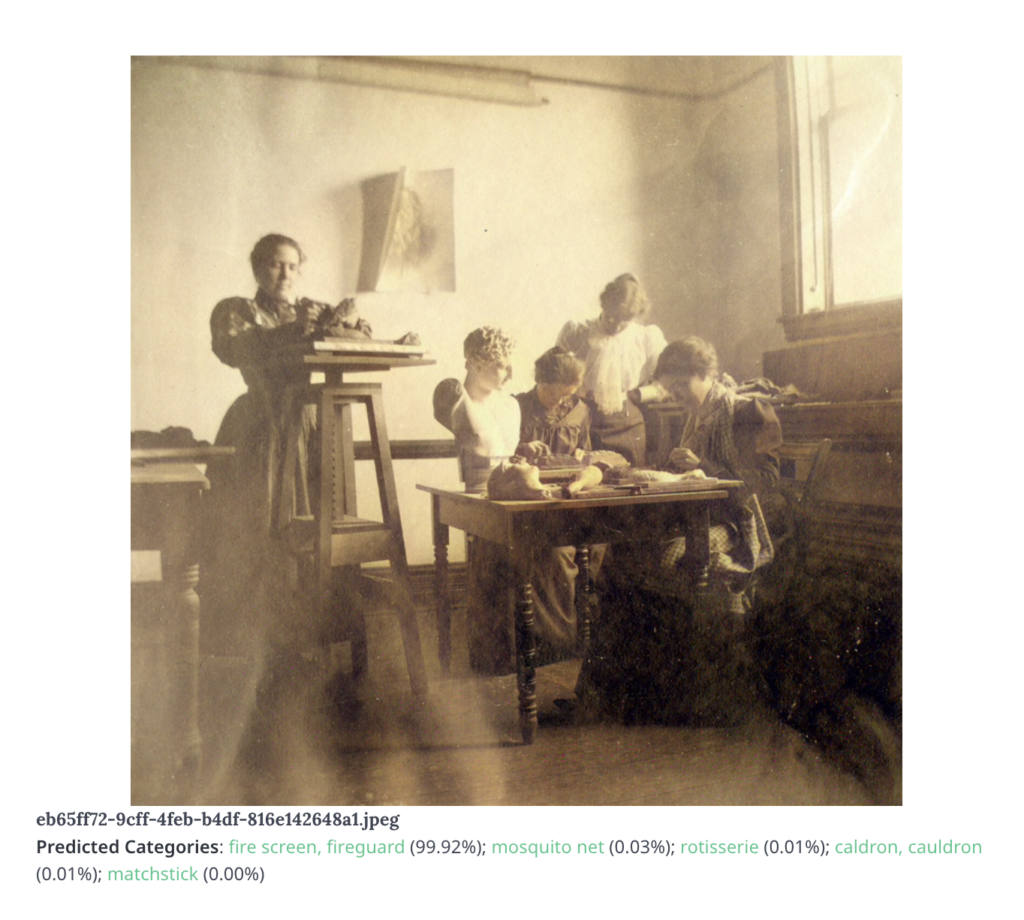
This is an example of the image classification feature on Distant Viewing Explorer.
These are examples of two different features on Distant Viewing Explorer. The object detection feature worked fairly well. It was able to identify most of the people in the room and several objects such as a chair and table. However, the image classification feature was completely wrong. The highest predicted category included a fire screen and a fire guard, which was completely inaccurate.
Hi Matilda! I totally agree with you that since AI tools are easily accessible, anyone is able to use them for misleading purposes. AI is not perfect, and it often makes mistakes, which sometimes might not be super obvious to detect and can easily deceive people. Your thoughts on photo coloring are also super interesting; to me, it felt like the AI just turned the black-and-white old photo into a yellowish vintage photo rather than doing any real, accurate colorization. This really supports your idea that AI is imperfect and doesn’t always work the way we expect it to!
I really loved the first quote you used in your blog, Matilda! I agree that color only “recreates a recreation”. It doesn’t capture the context behind the image or the message that the image is trying to convey. It was cool to see how to object detection tool you utilized was actually pretty accurate. Maybe it’s with color that AI models are the weakest?