Artificial intelligence makes it incredibly easy to generate colorized or altered images, but that convenience comes with serious ethical risks. When an AI system modifies an image — even something as simple as changing its color tones — it can introduce distortions that look authoritative but are completely wrong. This matters because images carry social meaning. They shape how we understand people, events, and history. If an AI colorizes a historical photo and assigns the wrong skin tone to a person, it is not just a technical mistake — it becomes a misrepresentation of identity, race, and lived experience.
One of the readings warns us that AI systems do not actually “know” what they are producing. As the author puts it,
“Think of ChatGPT as a blurry jpeg of all the text on the Web. It retains much of the information… but… all you will ever get is an approximation.”
Chiang, Ted. “Annals of Artificial Intelligence.” The New Yorker, 9 Feb. 2023.
That approximation becomes dangerous when applied to images. A blurry guess about someone’s race is not a harmless error; it can rewrite how viewers interpret the past or how they perceive a person in the present.
The illusion of understanding makes this even more troubling. Another reading notes that
“The fact that ChatGPT rephrases material from the Web instead of quoting it word for word… creates the illusion that ChatGPT understands the material.”
Chiang, Ted. “Annals of Artificial Intelligence.” The New Yorker, 9 Feb. 2023.
Image‑generation systems work the same way: they produce outputs that look intentional, thoughtful, and accurate, even though they are statistical predictions. When an AI colorizes a face, it is not reasoning about ancestry, lighting, or historical context. It is guessing.
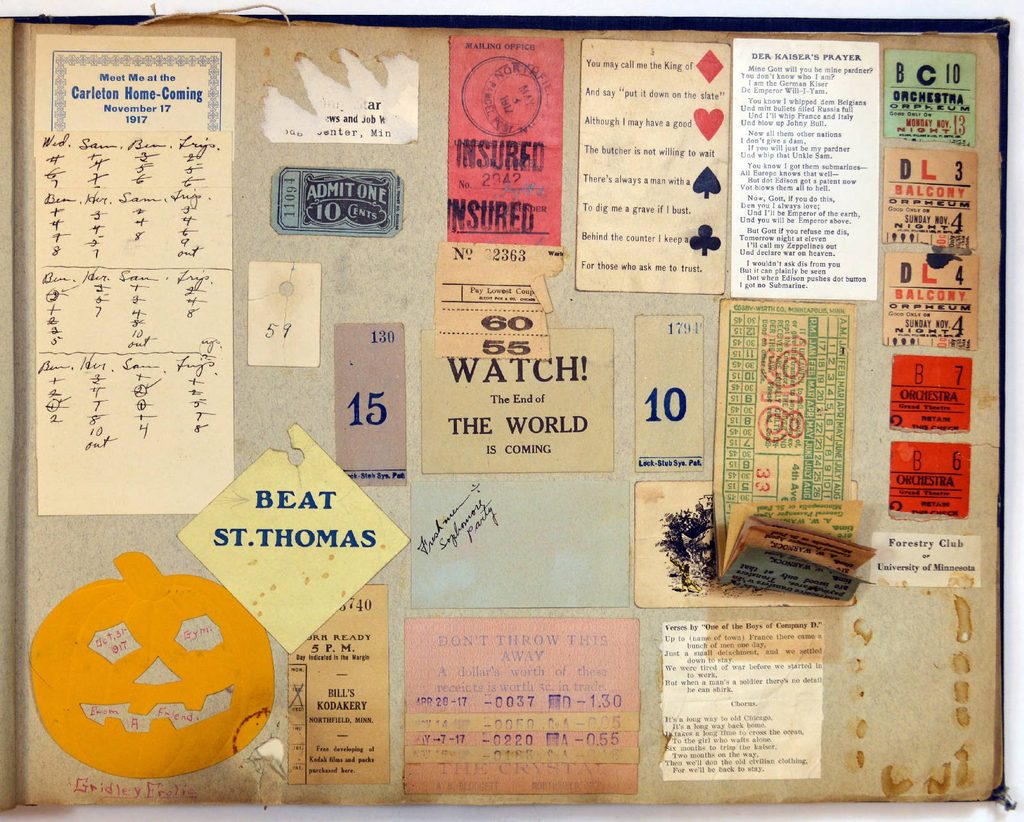
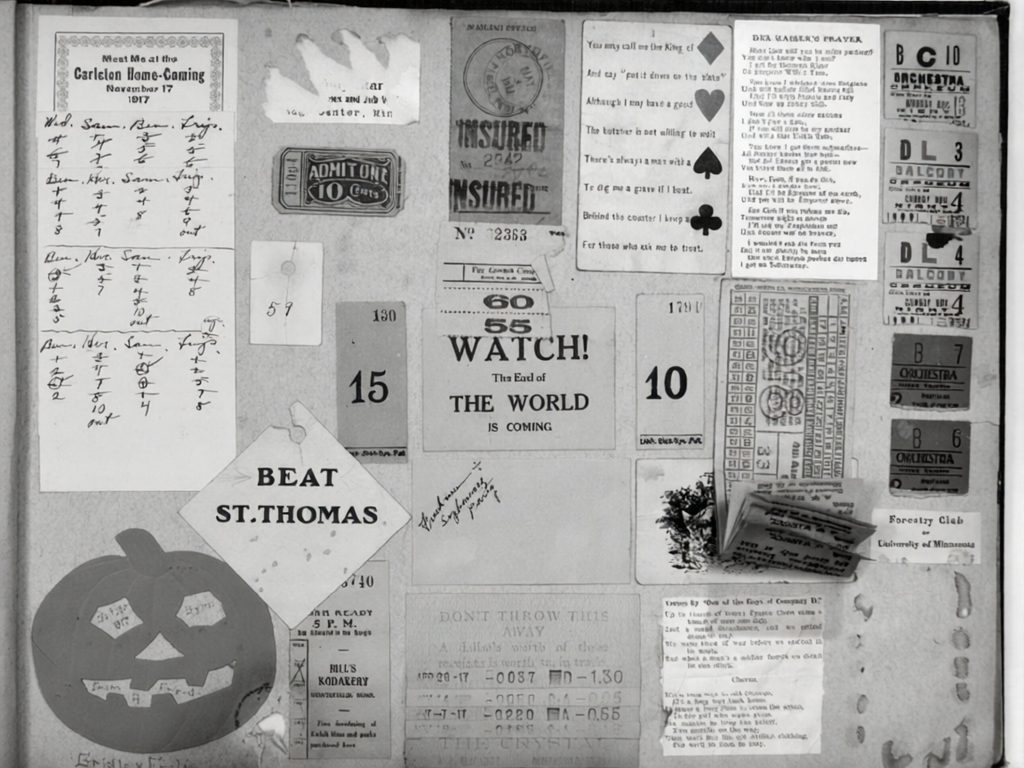
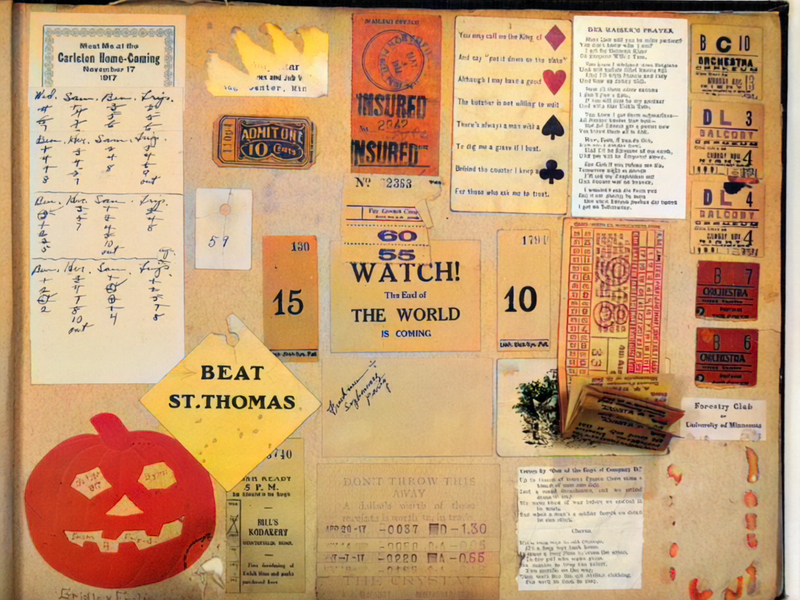
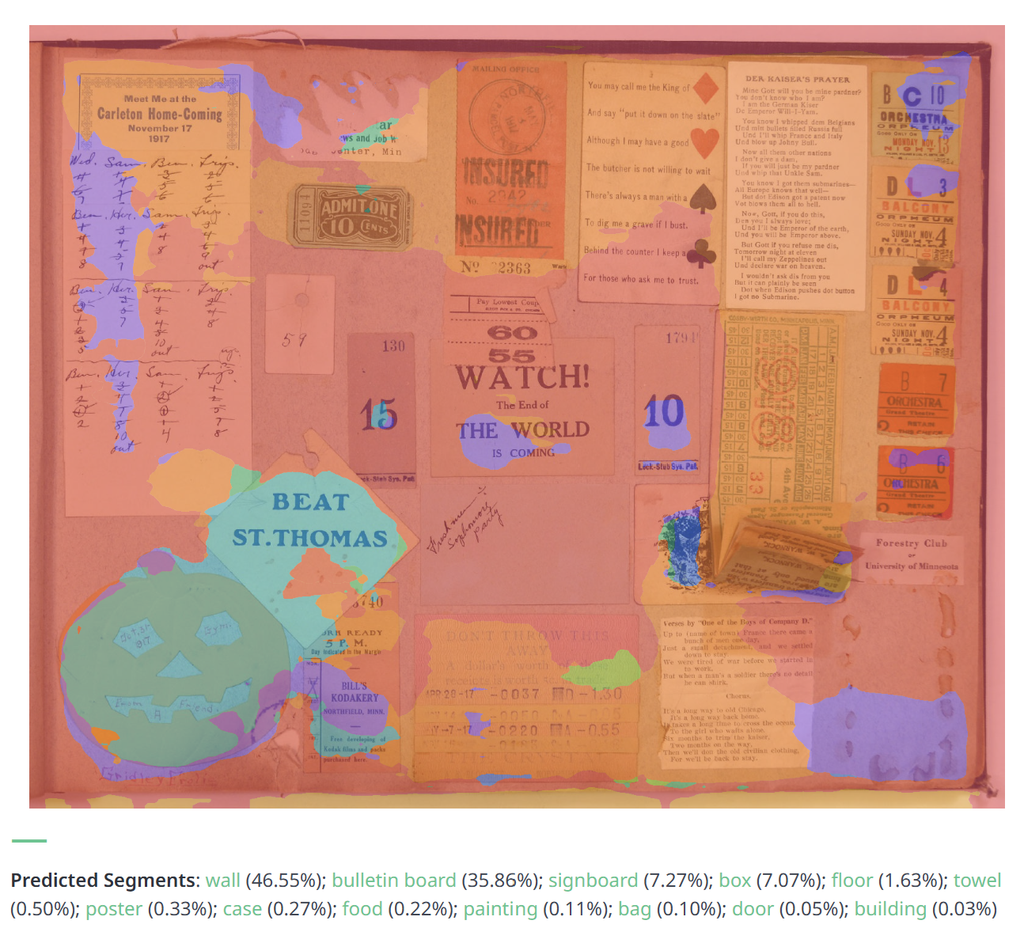
This is why AI‑generated images must be treated with skepticism. In the photos below, I started with a basic picture from the Carleton image archives. I used the same AI to turn the photo black and white then back to a colorized version. As you can observe the colors get very distorted. The AI messed up the orange and forgets many of the green hues. Surprisingly, the image segmentation AI is fairly accurate in categorizing the photo as a wall, bulletin board, sign board, etc.. However, it does include some segments like ‘building’ and ‘food’ that are nor accurate.
Evan, I agree with what you said and faced similar feelings during this project. It was super cool to see your picture with color, but as you mentioned it’s important to view it with context. I also loved how your poster had Carleton homecoming on it as homecoming this weekend. Also, football and a poker poem on this scrapbook? Looks like we’d be super tight with this person. Great job!