AI has increasingly become a salient issue, not just in academia or politics but in everyday life. Conversations discussing its potential as well as ethical and environmental concerns have become an important topic of discussion.
Ethical concern: misinformation
Using IIIF Image Inspector, I processed the photograph “2910 Domke” which I obtained from Carleton College’s CONTENTdm catalog, which created the picture shown below on the left. I then used DeOldify Image Colorization on DeepAI to create the colorized version of the same image as shown below on the right.
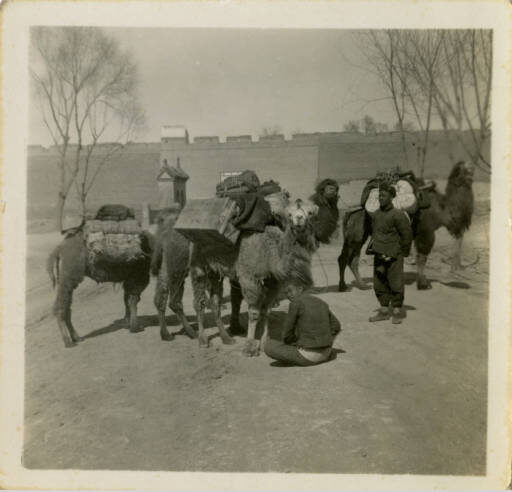
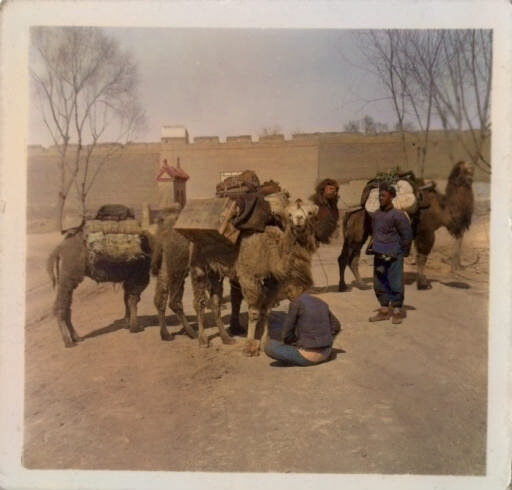
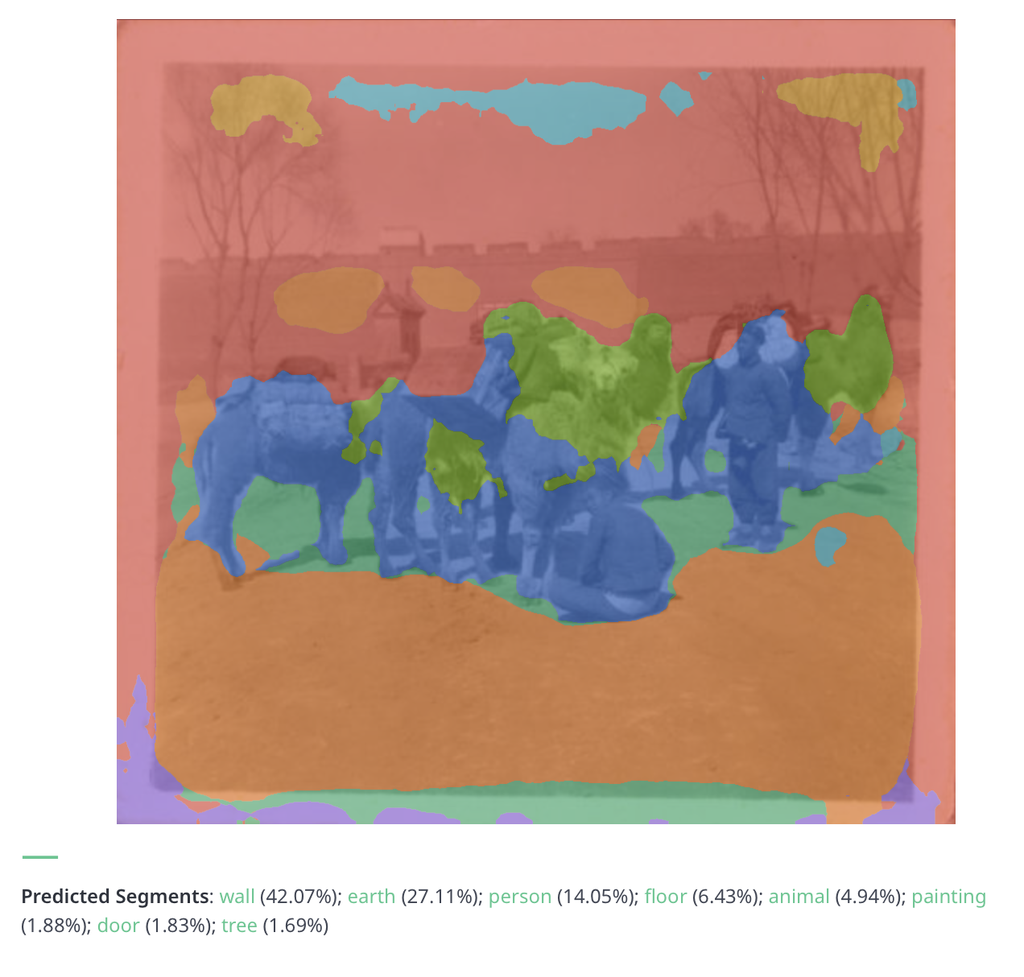
Using Distant Viewing Explorer, I used the Image Segmentation tool in order to group parts of the image into distinct categories. Here, we can clearly see that the AI has incorrectly categorized some parts of the photograph resulting in incorrect results. The camels on the left of the image have been incorrectly identified as a person. This results in misinformation which is arguably an ethical concern. If people have complete trust in what AI tells them, it results in a spread of misinformation which can be difficult to take back.
In the article, “How AI is hijacking art history,” Sonja Drimmer highlights a key difference between AI and the role of humans. She states “[a]t their core, art historians study the ways in which art can offer insights into how people once saw the world.” Yes, it can perhaps be interesting for some to know the empirical breakdown of photographs and other artworks like the percentage segments of an artwork. However, art history is largely concerned with interpretation. Although composition can play a significant role in analysis, data, often being regarded as absolute, is not the primary focal point of analysis.
However, as Lauren Tilton states in “Relating to Historical Sources,” “artificial intelligence is increasingly behind tagging, classifying, organizing, and filtering decisions that shape which sources historians encounter.” Therefore, we cannot deny the benefits that AI can bring to this field. It increases efficiency of work done by art historians and reduces the mental effort exerted in simply trying to find sources. However, it is important to remain cautious in the role AI has and to what extent it should be incorporated into the field in order to protect the interest of both consumers and art historians.
Hi Maina!
I agree with you that misinformation is a major ethical concern surrounding AI. When I used Distant Viewing Explorer, I also found that it gave me incorrect results. This also made me concerned that if people trust AI completely, it could risk spreading falsities. I found the quotes that you chose to be very insightful. As you said, although it’s true that AI could increase efficiency, it’s still important to remain wary of the risks that AI poses.