I chose a photograph of the dining room on the main floor of Gridley Hall at Carleton College, from Ruth Haven’s 1899 Student Photo Album. I thought it would be interesting to experiment with AI colorization using an image connected to my own college’s history. Through this exercise, I wanted to explore how AI manipulation can change both the appearance and interpretation of historical photographs.
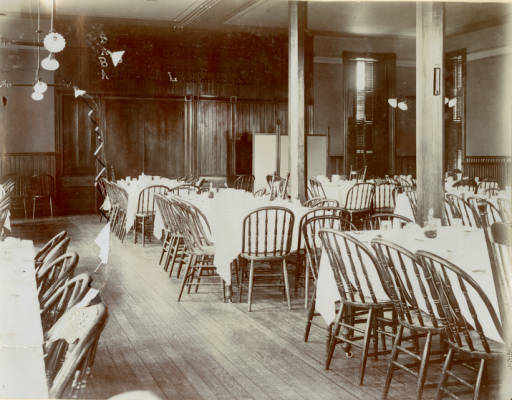
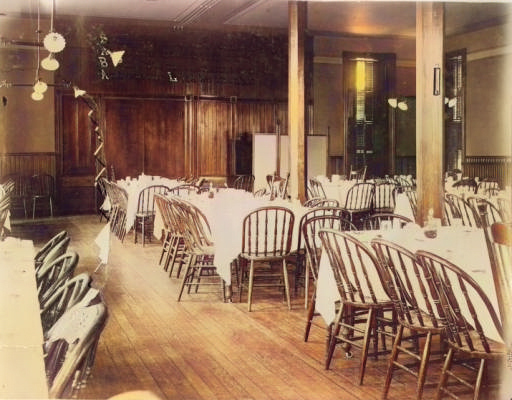
Comparing the original photograph with the colorized version, I noticed that the AI added warm brown tones to the wooden floors, chairs, and walls. It also introduced a yellow glow near the doorway, making the room appear warmer and more inviting. Although the colorized image looks realistic, we cannot determine whether these colors accurately represent the dining room in 1894. This connects to Ted Chiang’s article, where he describes how technology can make copies “seem accurate when they weren’t.” His argument made me think about how easily AI can create convincing representations that might not be historically accurate.
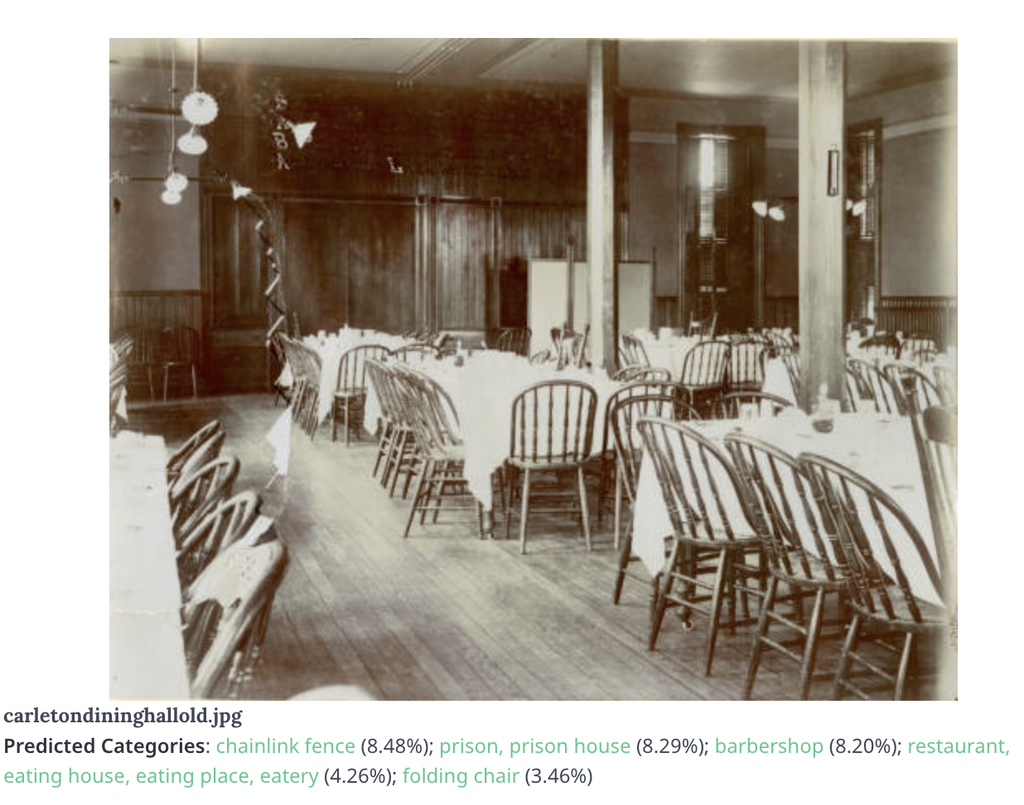
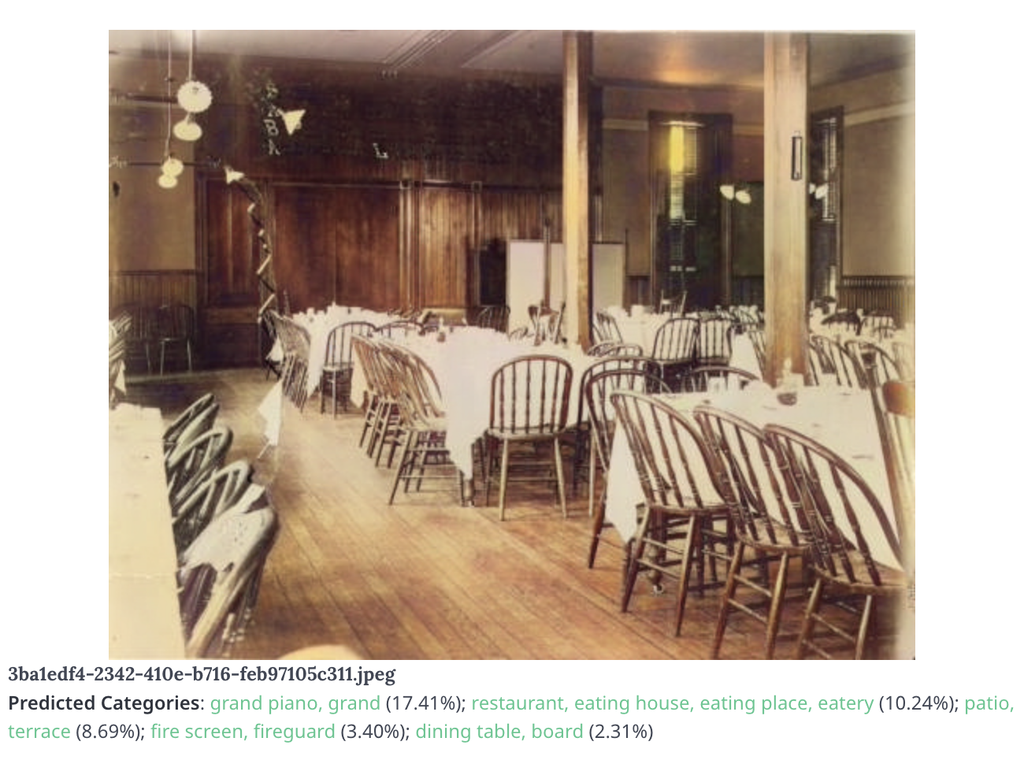
The Distant Viewing Explorer results were also interesting. For the original photograph, the top predicted categories included chainlink fence (8.48%), prison (8.29%), and barbershop (8.20%). However, after colorization, the top predictions changed to grand piano (17.41%), restaurant (10.24%), and patio (8.69%). I found it surprising that changing the colors could influence the AI’s interpretation so much, considering that the physical objects in the photograph remained the same.
Sonja Drimmer raises a similar concern in How AI Is Hijacking Art History, arguing that some AI projects “have not, in actuality, revealed one secret or solved a single mystery.” This relates to my experiment because the AI did not necessarily uncover new historical information. Instead, it generated new colors and classifications based on patterns it recognized. Overall, I think AI image manipulation can be useful for making historical photographs more engaging and accessible. However, it also creates ethical concerns about authenticity and accuracy. If people begin treating AI-generated interpretations as historical facts, we risk misunderstanding the past rather than learning more about it.
Jake, first thats a cool photo of the dining hall in 1899. I think it’s interesting how changing the colors of a photograph can also change how AI interprets the objects in it. I agree that colorization can make history more engaging, but it’s important to distinguish between AI-generated details and what we actually know about the past.
Jake, you raise a really good point here in your assessment of the ways that AI picks up on patterns, but does not necessarily produce new information. I think when considering AI image colorization, it is important to remember that we are not necessarily uncovering the past, but seeing the statistical result of a larger model/its training.
I find your pictures and the AI interpretation of them pretty interesting. I chose an image that had a lot of contrast because the photo was taken outside and thought inside photos wouldn’t do as well being colored, but this definitely challenges that idea. Your point about patters also intrigued me, because its decided color for an object stays consistent throughout the image as far as i can see.
I think that it is both interesting and scary that the AI image detection software detected completely different images based on if the image was colorized or not! While this did not happen with my photo, there is another thing which you touched on that I did see happen with my photo. Similarly to how the software added an overall yellowish glow to your photo, it added a general rosy hue to mine, seemingly reflecting some preconception it had about the mood of the image.