I chose to analyze The Wonderful Wizard of Oz. I used both Voyant Tools and Gemini Pro to analyze this book. Not surprisingly, both tools give me similar results for frequently used words, as shown in the following pictures.
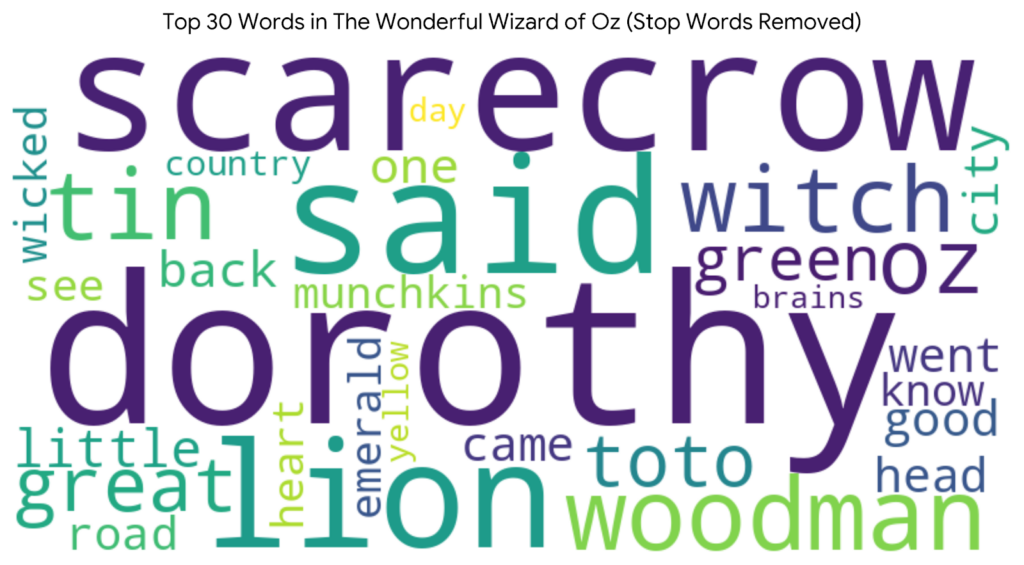
Frequently used words in The Wonderful Wizard of Oz, by Gemini
Frequently used words in The Wonderful Wizard of Oz, by Voyant.
From these visualizations, “Dorothy” is the most frequently used word. This makes sense since she is the main character, and a large portion of the book consists of her descriptions and dialogue.
In Voyant, I manually blanked out the word “said.” It appeared in almost every line of dialogue without adding much real meaning. However, Gemini still included “said” in its frequent word visualization. The high frequency of “said” might also reflect how much of the book is driven by dialogue. This highlights a key difference between the two tools. In Voyant, I have full control to manually add or remove words that I consider less important. While I am sure Gemini can do this as well, the overall workflow feels quite different.
Beyond word frequencies, Gemini also generated other visuals for me, such as the most frequent phrases chart and a character network map.
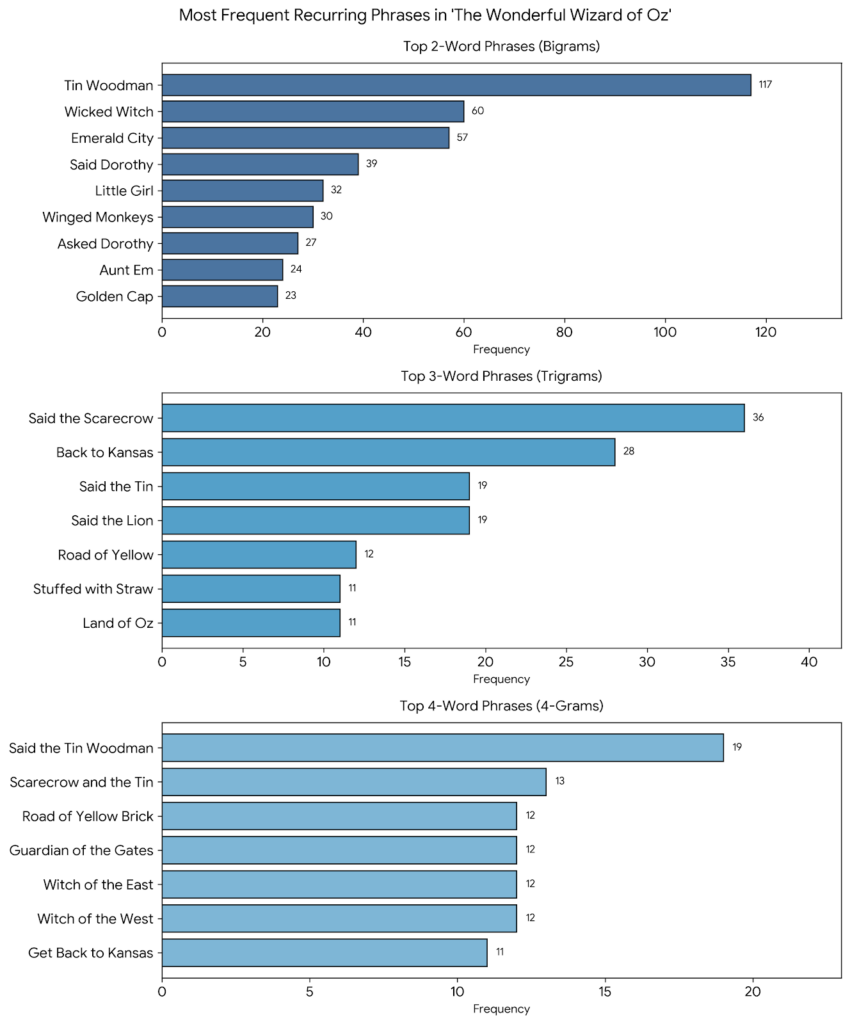
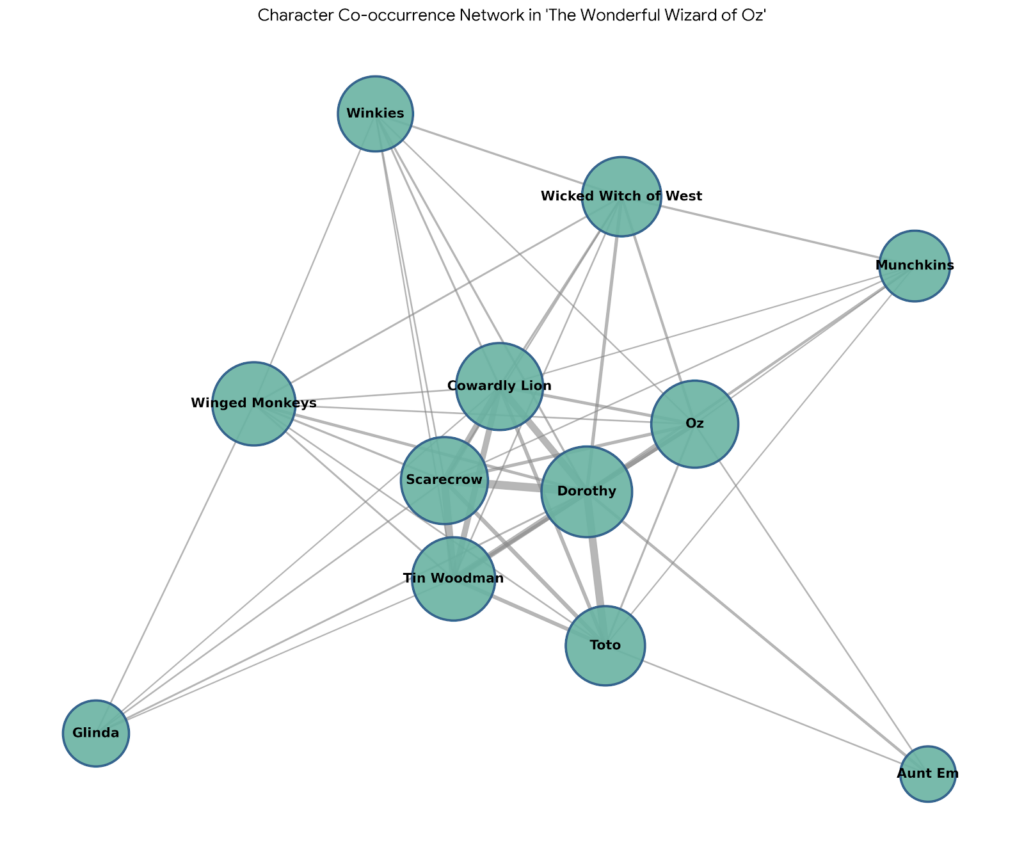
I think both tools are great for helping people understand and grasp a text much faster. Gemini can even infer the book’s genre purely from these high-frequency words. It discusses why The Wonderful Wizard of Oz is children’s fiction from a more objective, data-driven perspective, rather than just searching the web for an existing answer. Its strong data analysis capability is genuinely valuable.
However, computational text analysis in this Age of AI also comes with drawbacks. When AI can instantly generate plot summaries, text analyses, or critical insights, people might lose interest in actual reading. Beyond losing focus on long-form reading, AI-generated analysis often suffers from oversimplification and a lack of context. Sometimes, these overly simplified summaries fail to convey the visceral, emotional impact of the original text. Therefore, while AI is an effective reading assistant, literary analysis should still primarily take place within the original text and our own minds.
Overall, Distant Reading is a powerful tool. When combined with Close Reading, it allows readers to gain a deeper understanding of the text. Yet, it still cannot replace the direct sensory experience and rich detail that traditional close reading provides. Distant Reading is a great tool for summarizing, but literature requires much more than just a summary.