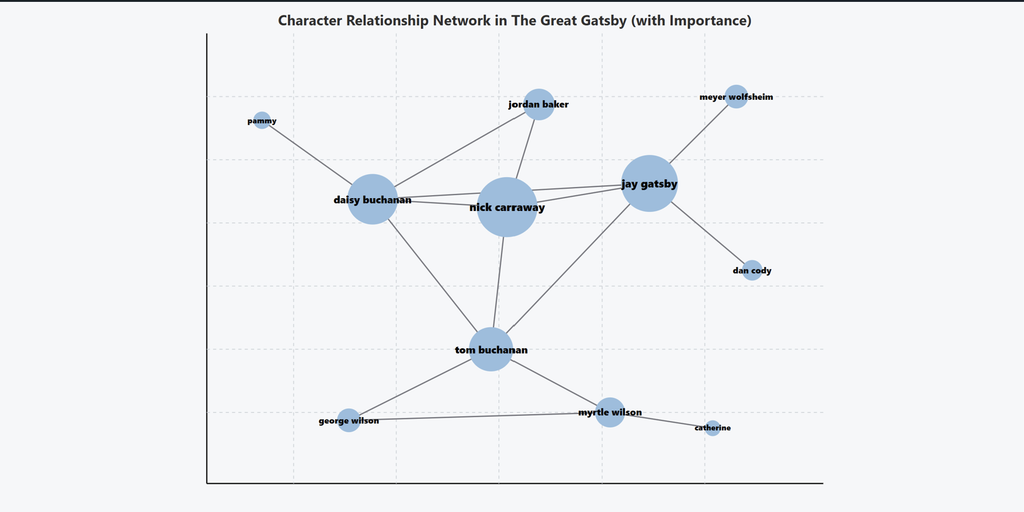
Computational approaches to literature open up new ways of seeing how stories work, letting us turn huge amounts of text into bag‑of‑words counts, n‑grams, and even network graphs. When we map The Great Gatsby, for example, we can quickly quantify Gatsby’s fixation or visualize the social web stretching across Long Island. But as helpful as these distant‑reading tools are, working with modern AI makes their strengths—and their limitations—much more obvious.
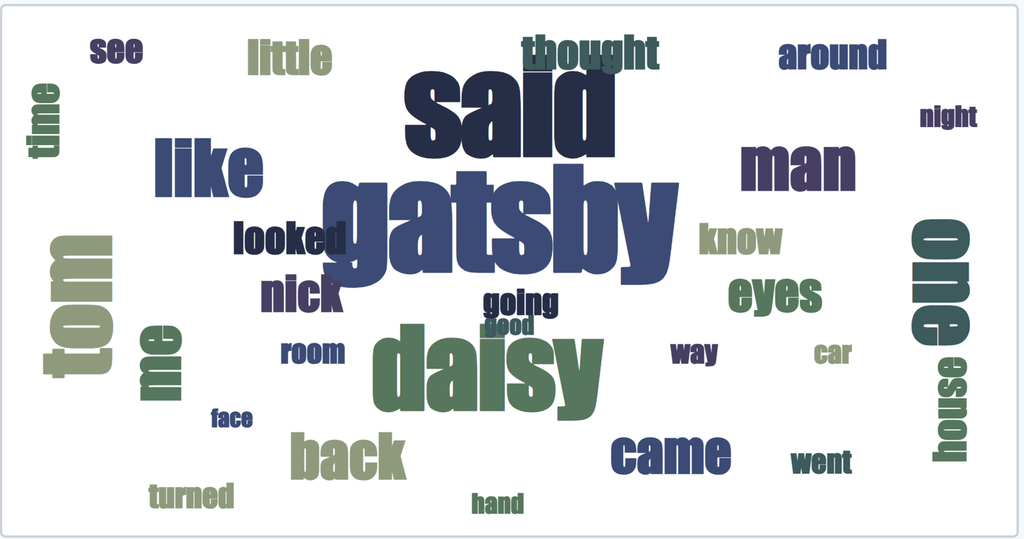
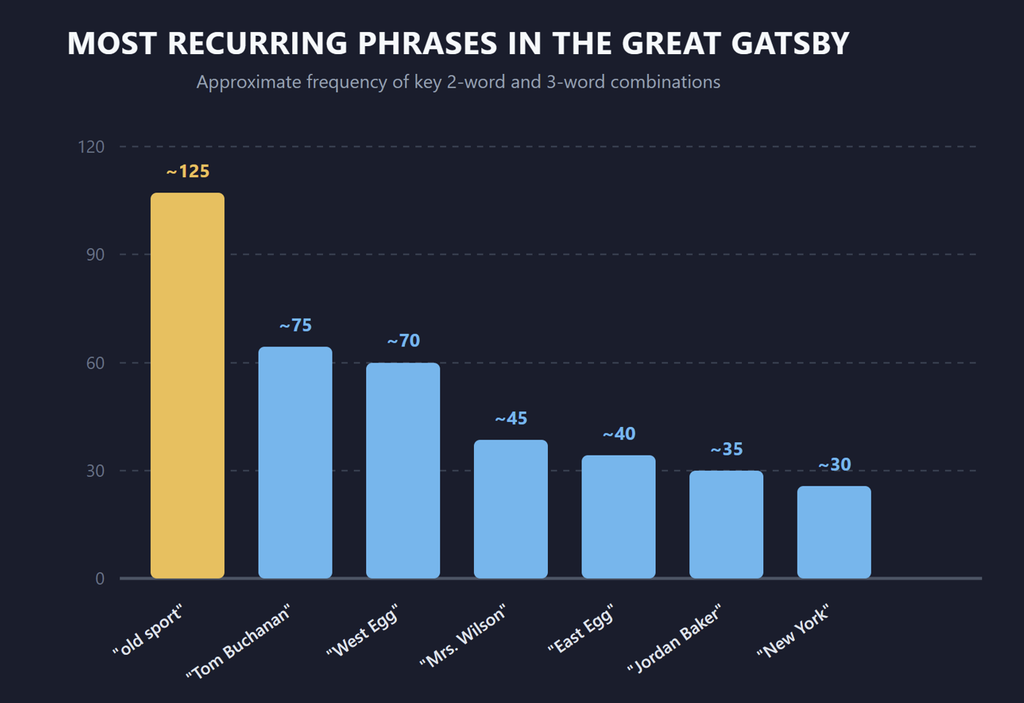
This work showed how the process moves from basic statistical extraction to intentional visual design. We started with the fundamentals: removing stop‑words, pulling out repeated phrases like Gatsby’s “old sport,” and identifying core character connections. First, after prompting AI to give me the most used words in the book, it simply gave me a ranking of the most used words and approximate word count associated with each. Still, raw numbers don’t automatically produce insight. Turning those findings into something meaningful—a styled bar chart, a polished word cloud, or mapping character relationships. It became clear that AI doesn’t deliver neutral truth; it reacts to our choices, our design preferences, and the structure of the instructions we give it.
After I prompted Gemini to create a character relationship map it created something that was not very visually appealing. It took changing the prompt a few times and asking AI to make it look better to get the results I was looking for. The word map also had some troubles, AI doesn’t have the word cloud specific programming like ‘voyant’ does and the words can be seen overlapping each other, but the main idea behind the data is present. However, When I asked to make the Bar chart, AI created a clean looking bar chart that reflects the most used phrases throughout the book. It seems to me AI–or at least Gemini–is much more versed in computational bar graphs than visually creative relationship and word clouds.