A tsukubai (蹲踞) washbasin is traditionally used for ritual purification and cleansing before entering the garden. If you were to have a tea party within, you would use the tsukubai to both prevent germs, and to rid yourself of any evil spirits that may be haunting you.
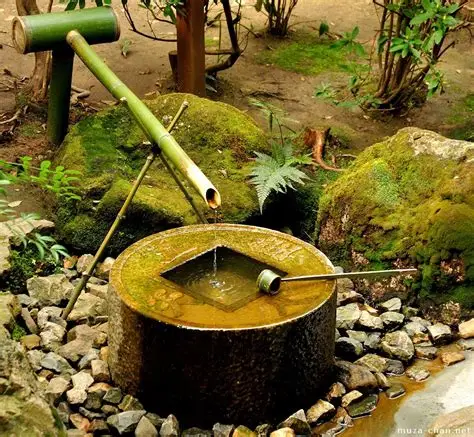
The image above is one of the most famous of tsukubais; it is located in the widely recognized Ryoan-ju garden in Kyoto.
We have our own garden here at Carleton with a corresponding tsukubai:
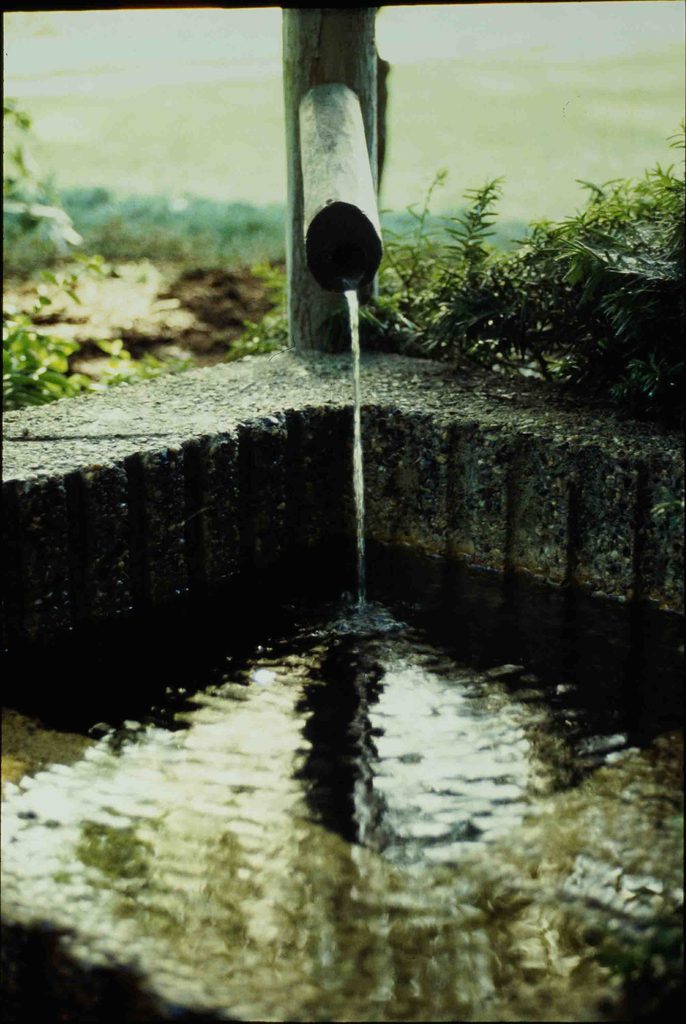
Our class is attempting to digitize the Carleton Japanese garden for its 50th birthday. For starters, we used photogrammetry to turn several 2d pictures into 3d models. The following is the result of a relatively low-effort PolyCam scan:
We then uploaded into Metashape for much more detailed render (the following is 200,000 faces, but was originally 6,000,000 faces!)
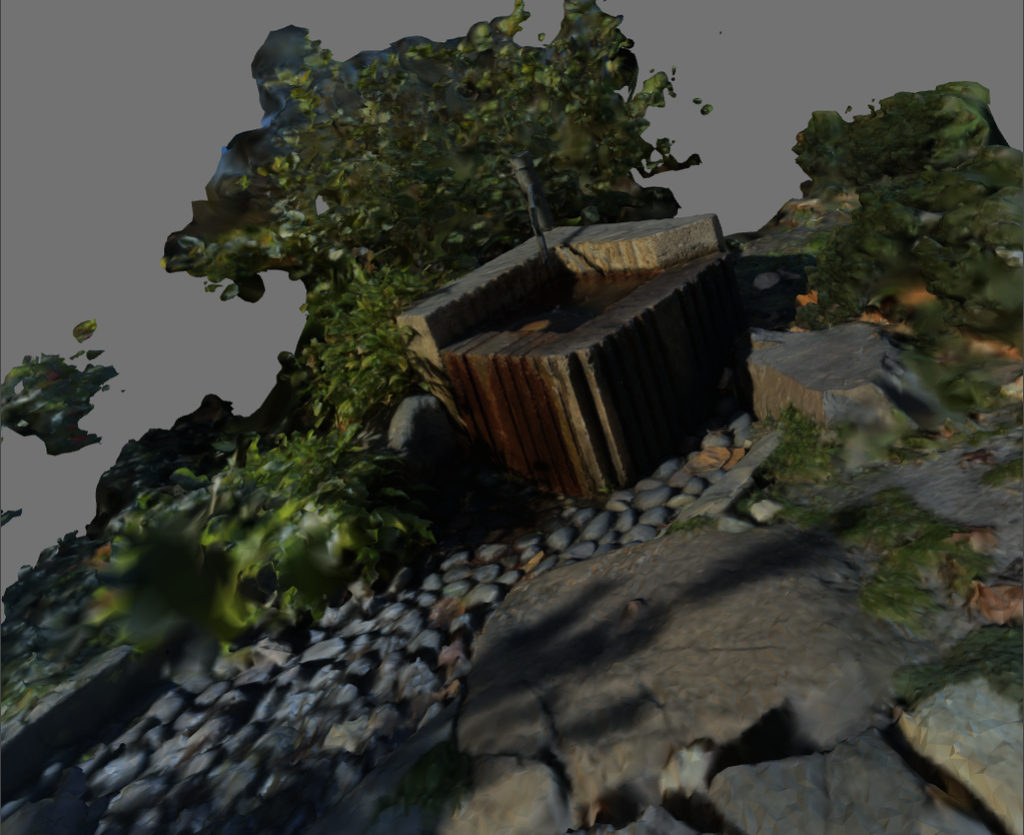
Finally, we created a polygon where the basin was for the archivists completing the project later on. (I wasn’t sure how to correctly embed this, sorry:)
This was an awesome project. I was blown away by the way the 2d photos could come to life in 3d. I would love to study the algorithms that were used to construct the models that we ended up using. However, for now, some questions:
- Does the process of photogrammetry encourage close looking and attention to details you might otherwise have ignored?
I would say yes, by having your brain notice what isn’t there. When looking at the world, there are many features that one takes for granted: texture, shadow, items not phasing into each other. It is only when these features are distorted that we notice, and demand existence. A surface that initially seemed smooth might turn out to have countless small irregularities, while an object that seemed simple might prove difficult to reconstruct accurately. For example, with the wash basin, I never noticed how jagged the surface of the basin was until the decimation process removed the jags.
- Does engaging with the built environment in this way make you more curious about this (and/or other) things, as well as the stories they can tell?
Yes! I am super excited to learn more about how these techniques can be used for other fields of academic study and presentation. Just as engaging more senses can be used to heighten someone’s learning experience (e.g., sound) adding an additional access to the process makes them able to be reasoned about in a whole new suite of ways.
Your models turned out great! I was also surprised by how the 2D images created the models. My team did the Dark stone “stream” feature and despite not taking individual pictures of each stone, they came out very accurate.
I do wonder if it is possible to better model plants as I know my group also had issues with the bushes in particular becoming warped. For whatever reason, the grass on one of our models did very well and even included detailed pine needles on the ground.
I wonder if there is something about the density of the overlapping leaves that makes them harder to 3d model?
Hi, I liked your models of the tsukubai! I also really liked your point about this process allowing you to recognize what isn’t there and the different textures that are present as I think it’s more common for us to focus on what we do see. This process can definitely be used in other disciplines and I’d be curious to see if it’s possible to also bring in other senses such as sound to create a further immersive experience.