For the exercise this week I selected a historical photograph from the Carleton Archives which depicts three women posing outside. I used AI to colorize and improve the picture and the outcome was impressive. The grass became green, the women’s dresses appeared in pink, blue and yellow and the buildings and the trees looked a much clearer. However, when I looked at the two versions side by side I began to question how accurate the new image actually was.
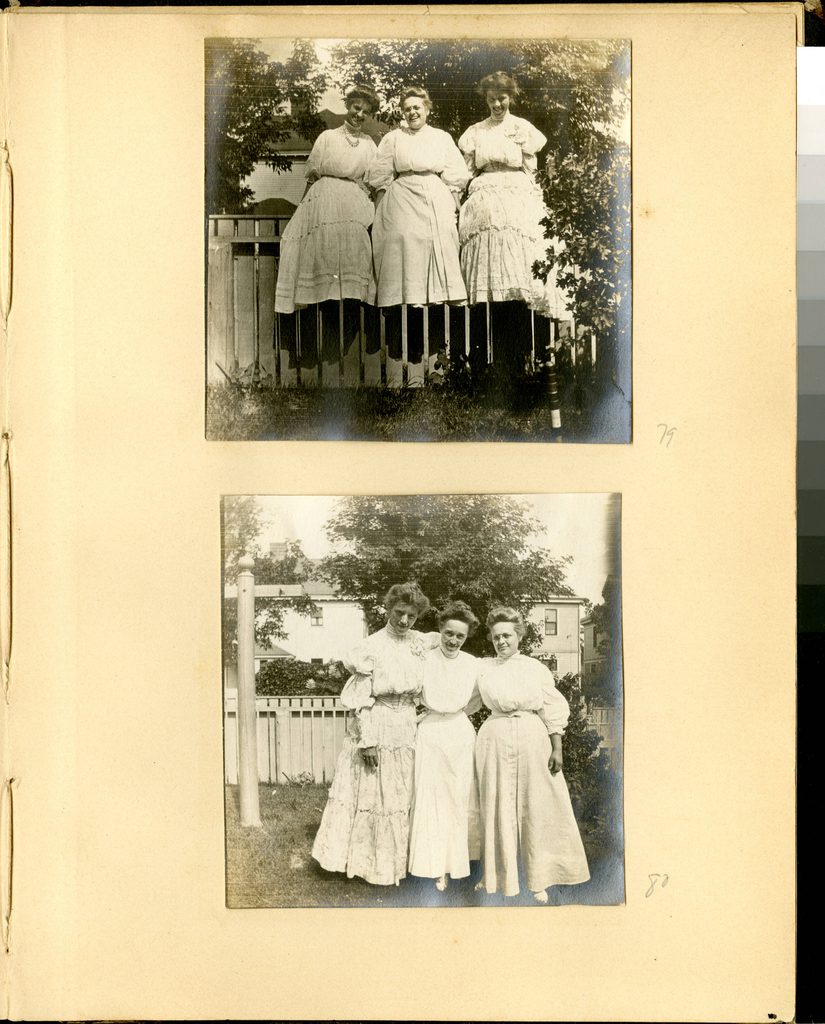
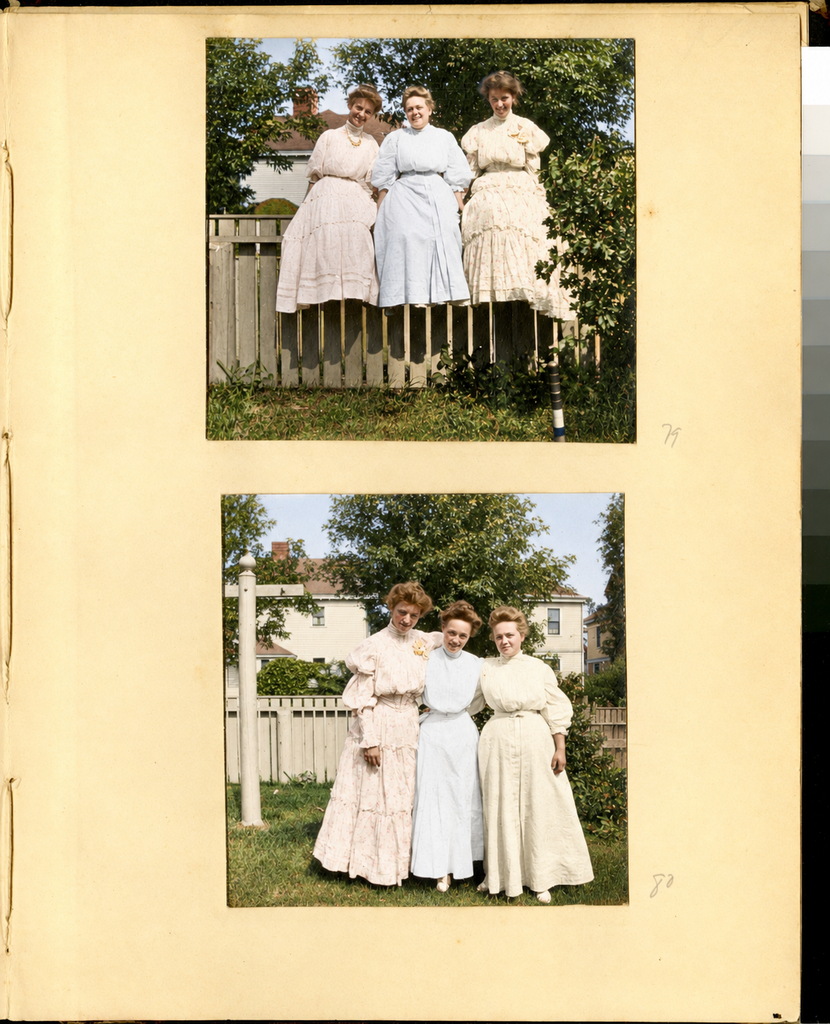
An ethical concern that I observed is the ease with which AI can alter our understanding of history, even though it appears to be merely restoring it. As Sonja Drimmer states in How AI Is Hijacking Art History,
“Adding color does not show things as they were.”
This has made me consider more carefully what the AI was actually doing. Although the colorized photograph seems more realistic to us now, the AI doesn’t really know what colors the women actually wore; it only speculates as to what those colors might have been.
Ted Chiang reaches a similar conclusion in his article “ChatGPT Is a Blurry JPEG of the Web“; he states that
“the copies it produced seemed accurate even though they weren’t”.
I believe this idea applies to AI image enhancement as well, since the more realistic an image appears, the more likely we are to think that it shows what actually happened.
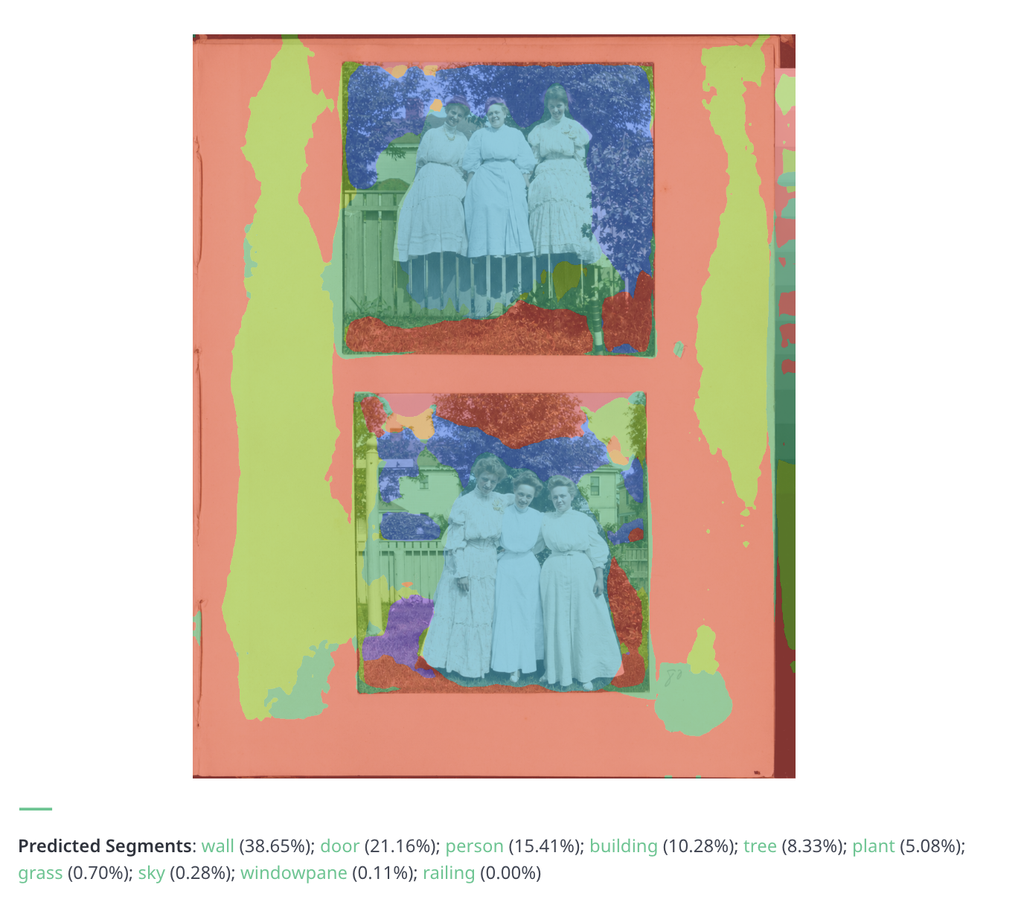
This has also led me to consider the way in which we should make use of tools such as Distant Viewing Explorer. Although such tools enable us to study historical images in new ways, the results are still computer-generated interpretations rather than exact reproductions of the past.
I believe that AI colorization is useful since it makes old photographs more interesting and easier to see. That said, it is important to understand the difference between restoring an image and producing something based on our imagination. It is reasonable to present both the original and the AI-colored version, using clear labels to explain the changes. Only then can we take advantage of the benefits of AI without mistaking its results for actual history.