text Analysis of The Great Gatsby
I chose The Great Gatsby by F. Scott Fitzgerald. My main approach to computationally analyzing textual data was to examine the word cloud and word frequency trends, then combine these observations with the novel’s context to explain the patterns.
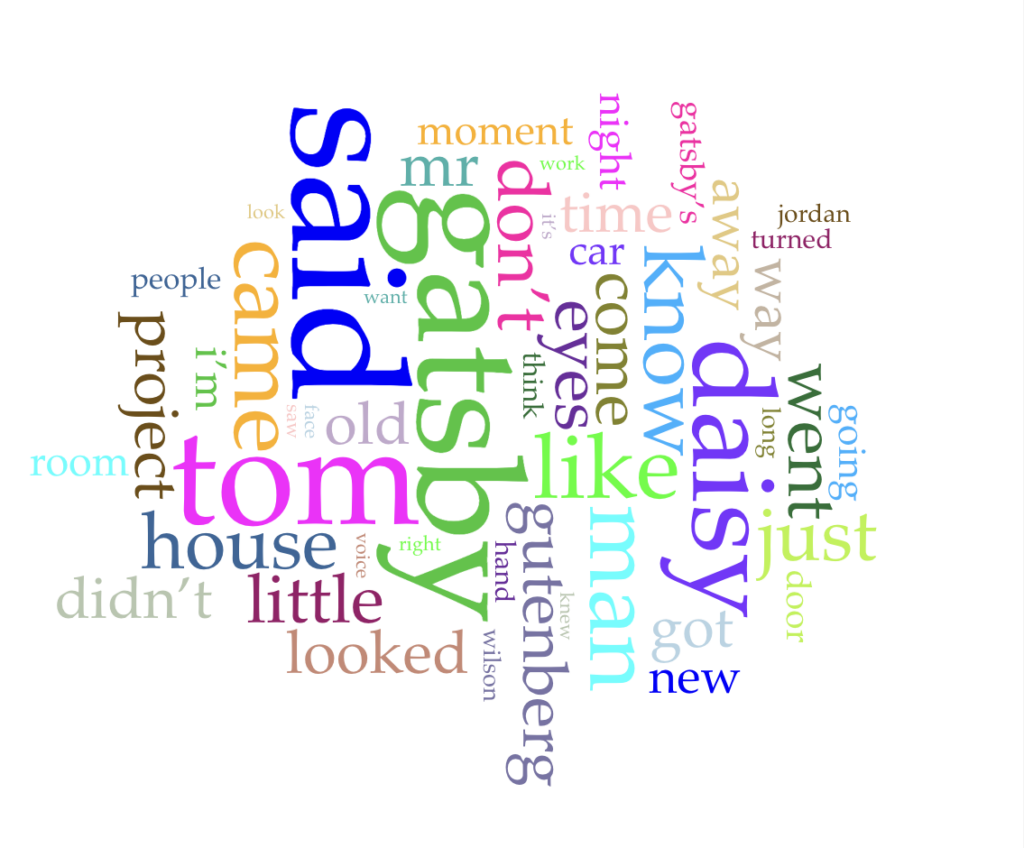
In the word cloud, the names Gatsby, Tom, and Daisy appeared a lot. This makes sense because Nick tells the story in the first person and frequently refers to other characters by name. Their prominence also reflects their importance to the plot and their relationships with Nick. Another noticeable word is “said,” suggesting that dialogue plays an important role in developing characters and relationships. Words such as “like,” “know,” and “man” also appear frequently, although understanding their significance requires examining the surrounding sentences.
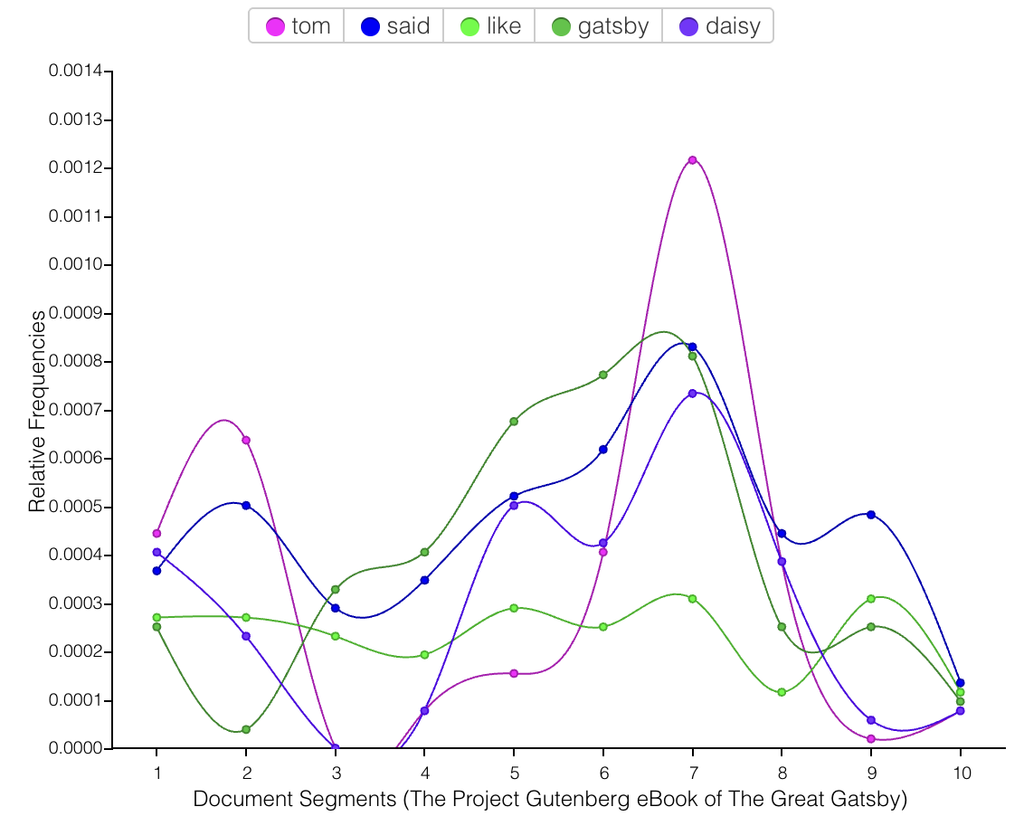
The trends graph shows how word frequencies change across ten segments of the novel. For example, “Tom” increases sharply in segment seven, suggesting that his presence or importance may be greater in that section. Comparing these changes with the plot could help identify sections focused on particular characters or conflicts.
Overall, computational analysis helps reveal patterns that may be difficult to notice through reading alone. However, word frequencies cannot explain the meaning behind these patterns without considering the novel’s context.
Text Analysis in the age of Gen AI
In the Age of AI, we should be concerned about becoming overly dependent on technology and losing our ability to think critically. AI can analyze large amounts of information quickly, but it does not necessarily understand the deeper meaning behind the information. As my analysis of The Great Gatsby shows, identifying frequent words is only the first step. Human interpretation is necessary to understand their significance. We should also be concerned about misinformation, privacy, and the possibility that AI-generated content. Rather than allowing AI to do all the work for us, we should utilize its ability to deal with large amounts of data quickly while maintaining our own judgment and creativity.