Mapping prejudice through Posner’s Framework
Miriam Posner argues that every digital humanities project rests upon three layers: sources (assets), processes (services), and presentation (display). I tested her framework on Mapping Prejudice, a University of Minnesota Libraries project that maps how historic racial covenants, discriminatory clauses written into property deeds, shaped housing segregation in the Twin Cities.
Reverse Engineering the Black Box
The project’s assets are unindexed historical property deeds, warranty records, and municipal GIS parcel boundary files. County recorders filed deeds by property and owner so that nobody could search them for the clauses buried inside.
To turn those records into data, the team scans each deed and runs Optical Character Recognition (OCR) to flag terms like race. OCR makes mistakes, so community volunteers check the flagged text during bi-monthly mapping sessions. After that, the team uses GIS tools to link lot numbers to map coordinates. Without that human review, OCR errors would flow straight into the map.
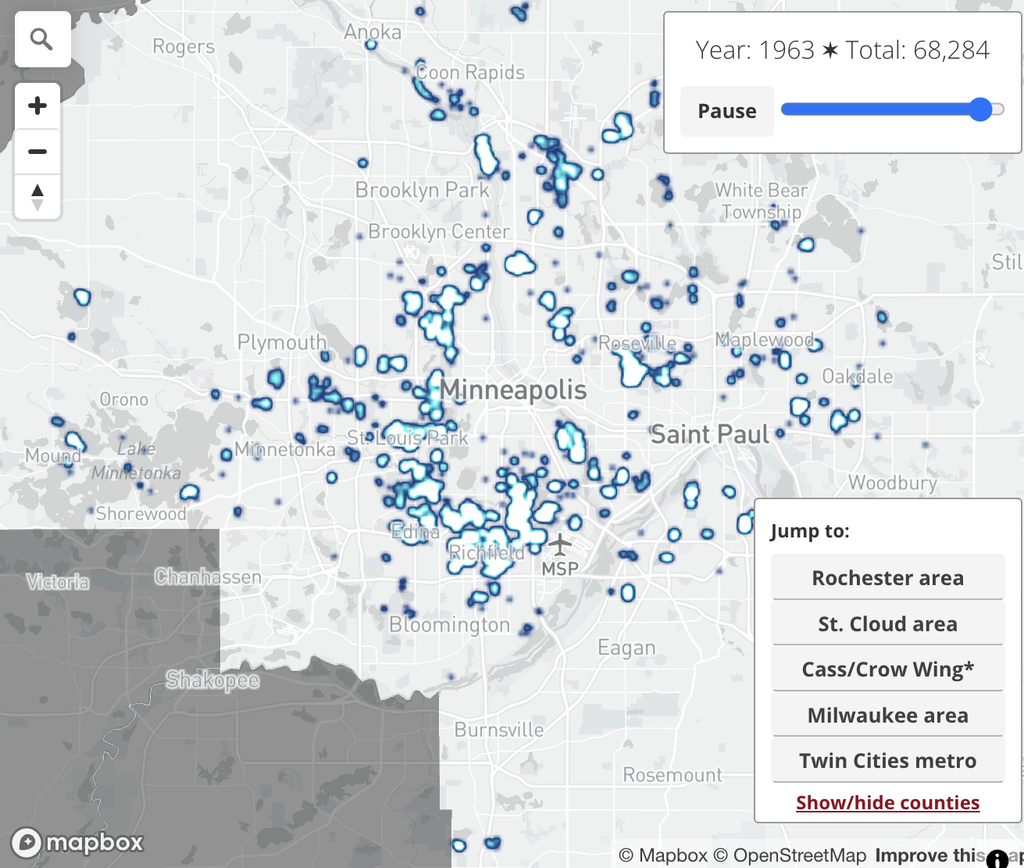
The display layer runs on Mapbox and OpenStreetMap tiles. Visitors can watch covenants accumulate on an interactive time-lapse map and read oral histories in the Stories from the map section. They can also download the data under a Creative Commons license.
Invisible Labor
The finished map hides a large amount of labor. Thousands of volunteers have spent hours transcribing deeds, archivists retrieve the records, and organizers run restorative workshops. A visitor scrolling the timelapse sees none of those hours.
Public action
The team built the project for the general public, as well as for scholars. Homeowners who find a covenant on their property can use the project to discharge it from their deed.
A Question Going Forward
How can a digital map signal archival silences, the records that are missing or were never digitized, without leading viewers to assume that unmapped neighborhoods were historically equitable? A blank parcel can mean no covenant existed, or it can mean no one has found the deed yet.