Introduction and Goal
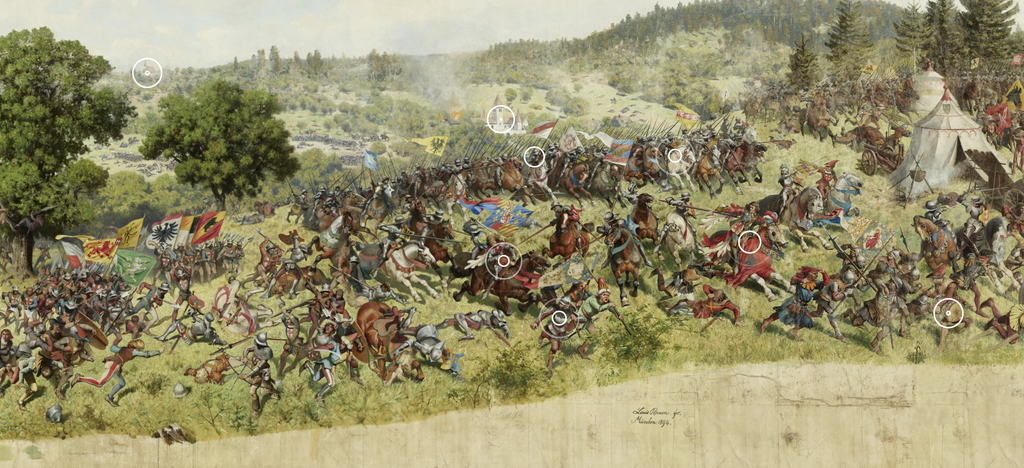
This week I explored the Terapixel Panorama which depicts a 19th century painting of the Battle of Murten which occurred in 1476 in Switzerland. It is a digital humanities project that aims to both digitally preserve and also create an interactive and multisensory experience that is accessible by anyone with access to the website. The original painting was created by Louis Braun who was a German painter known for large-scale artworks. This piece was created using oil on canvas and is 10m x 100m. The digital project includes optional guided tours which has videos that explain different parts of the painting as well as accompanying descriptive text, and also an option to explore by yourself.
target audience
The target audience is the broader public as anyone can easily access and understand the information presented in this project. People who are interested in history and/or art may especially enjoy exploring this project.
Source
The main source is the physical painting itself. The information used for the interpretative videos and text is gathered by different scholars and compiled by the project team. Collaboration is an integral part of this process as outlined here. This page also keeps track of and lists any edits that have been made which creates transparency.
process
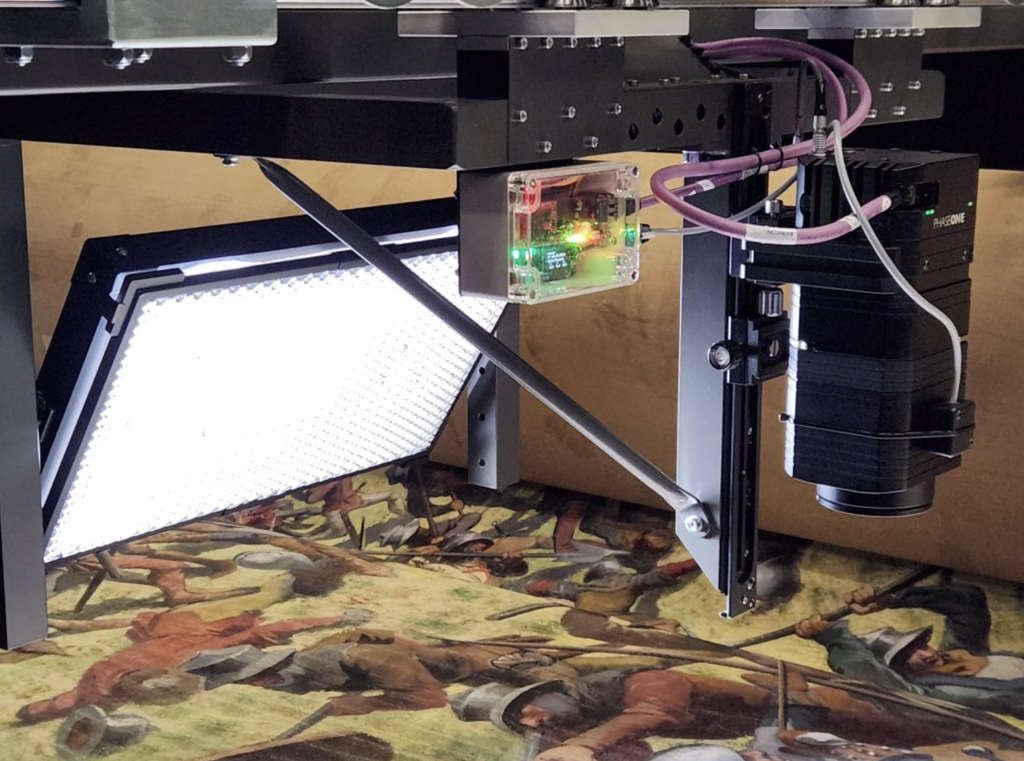
The painting had to be scanned and digitalized. This involved using a powerful camera and capturing small overlapping sections of the painting at a time (360mm by 270mm). The images were then stitched together using a Graphical User Interface for Panorama Tools. If you’re curious and want to learn more about this process, visit this link!
Presentation
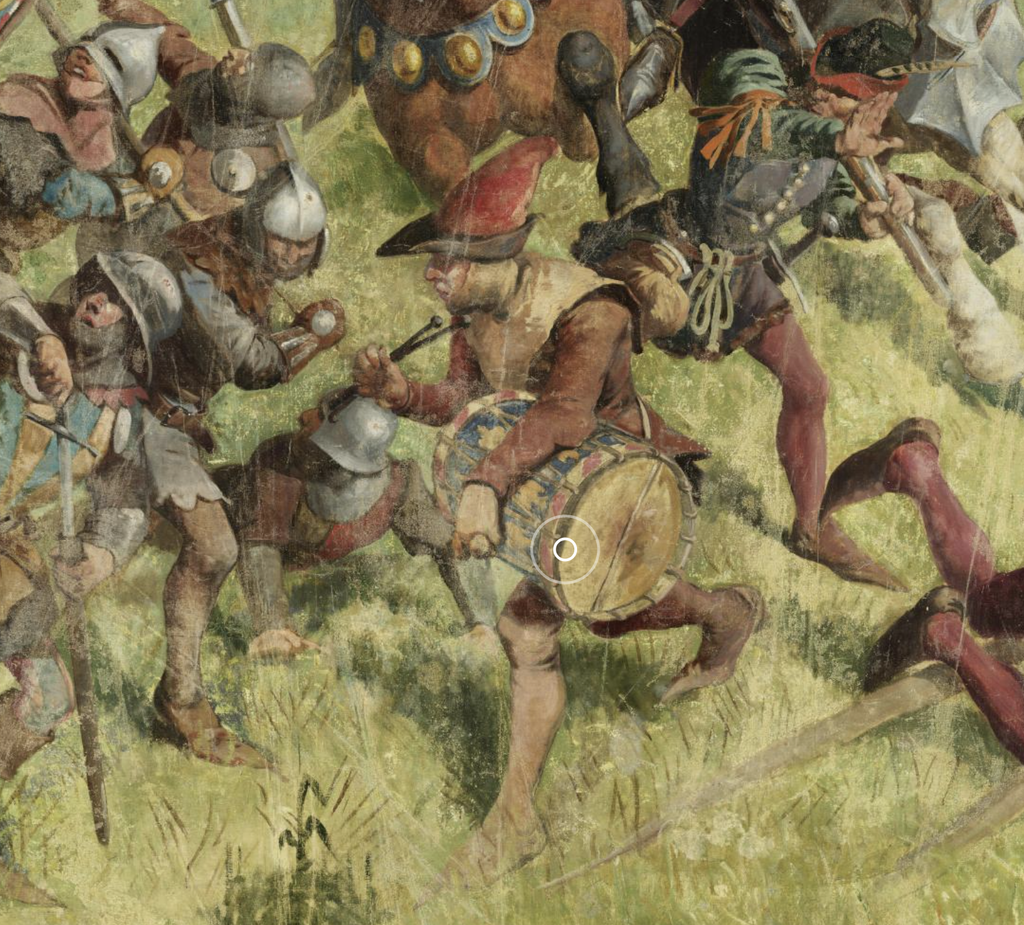
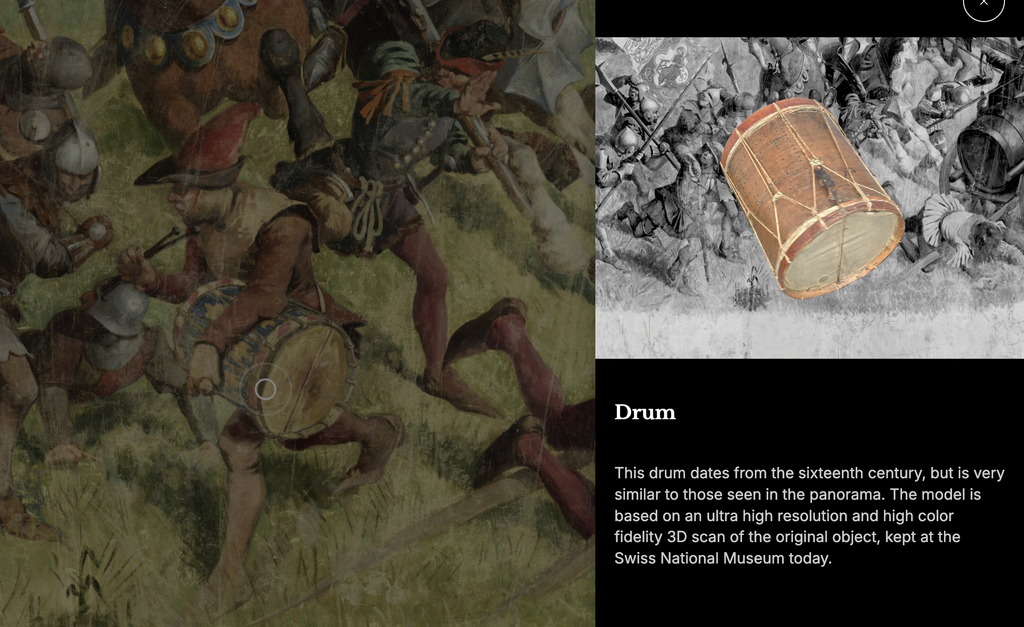
The user can freely explore the digital panorama by zooming into specific sections and moving around. There are numerous floating buttons which they can click that will provide them with supplementary information either about specific objects or interpretations of the specific scene. For example, the image on the left shows a man holding a drum. After clicking on the button the description is displayed as shown in the image on the right. Additionally, the website provides a video showing a 360 degree view of the 3D modeled drum.
question
I wonder how they are able to make this accessible to the public for free as it seems like there was a lot of time, machinery, people needed to make this project so successful.