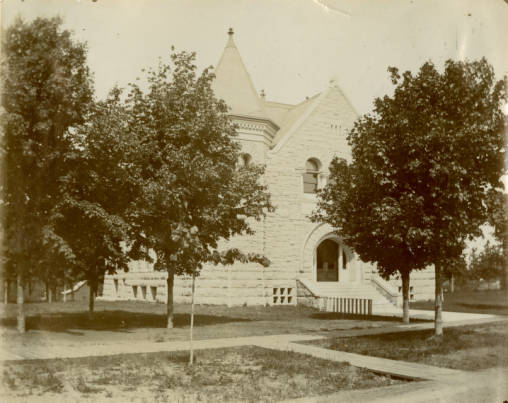
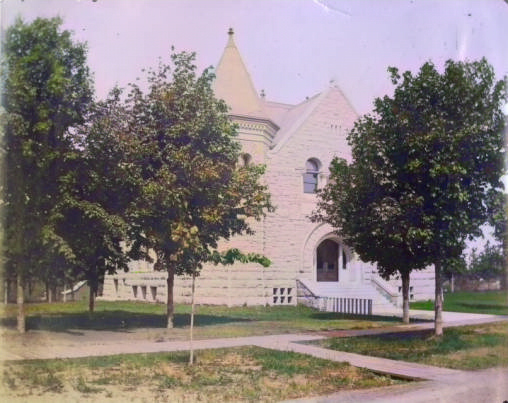
I colorized a photograph of Scoville for this exercise, which was good because the original photograph was fairly clear, and it’s a familiar building that’s still around. The image produced was somewhat believable in terms of the colors, but I did notice that the roof on the tallest part (on the left side of the building in the image) is a darker shade of gray in real life, and in the colorized image, it’s the same tan color as the rest of Scoville. It makes sense that the AI did this; it doesn’t know how Scoville actually looks. But that’s exactly the issue.
Having AI manipulate images seems extremely dangerous to me. For so long, photographs were the clearest form of evidence in the world, and now, they can be easily manipulated and created by AI. Additionally, AI simply doesn’t have the awareness, most of the time, to insert information where there is none (like with colorization). It seems cool to colorize old photos, but in a sense, I feel it’s almost pointless. Why alter and impose modern ideas onto old photos; do we really need to guess that someone’s shirt is green to be able to get anything from the image? As Sonja Drimmer says in How AI is hijacking art history, “These recreations don’t teach us anything we didn’t know about the artists and their methods.” The same goes for history generally; a colorized version of a photograph doesn’t give us any new information; it just muddles the real history.
“But I don’t think that anyone would claim that photocopiers have become an essential tool in the creation of art; the vast majority of artists don’t use them in their creative process, and no one argues that they’re putting themselves at a disadvantage with that choice.”
Ted Chiang, ChatGPT Is a Blurry JPEG of the Web, The New Yorker
The quote above from Ted Chiang highlights the exact ethical issue of AI. There are ways in which people can use it to do menial tasks, if they so choose. But the second that people start considering AI to be an actual essential tool in the creation process of anything is dangerous. Image manipulation falls into that category; by manipulating the image, AI distinctly changes the actual material. Not only is AI image manipulation problematic in the context of altering history, but it is also replacing processes that human creativity should be in charge of.
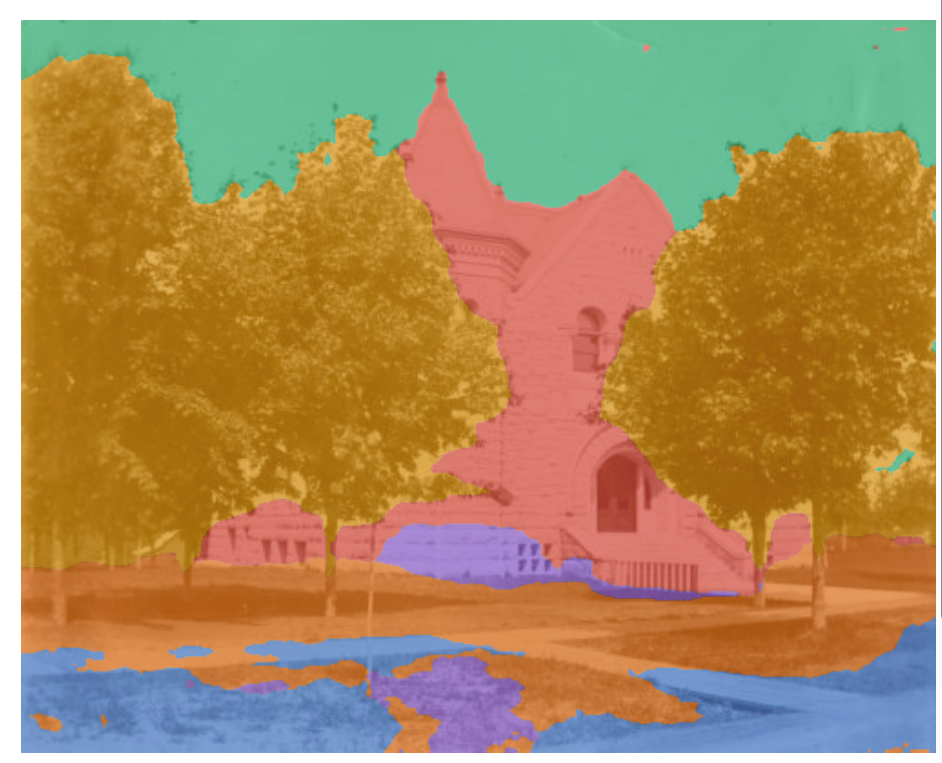
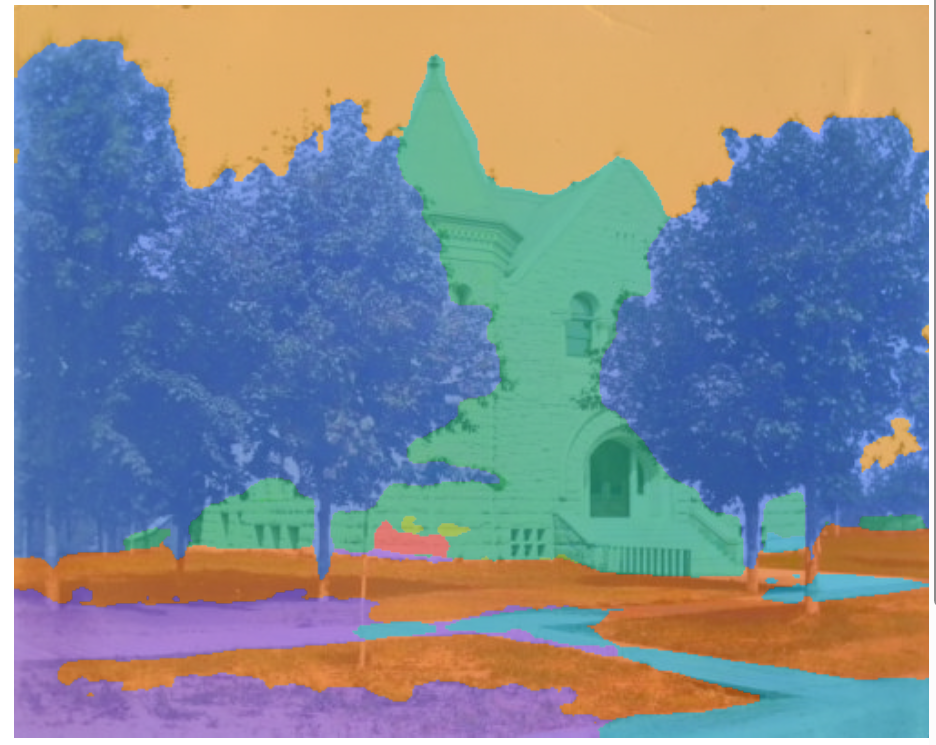
Below are the compared segmentations from the Distant Viewing Explorer: on the left is the segmentation of the original image, and on the right is the segmentation of the AI-colorized image. While the segmentation was never quite accurate, there are noticeable differences between the two. This points to a core issue: AI didn’t just add color; it distinctly altered the image’s makeup. To some, that could be the goal, but I find the ethical implications of this to be too grand.