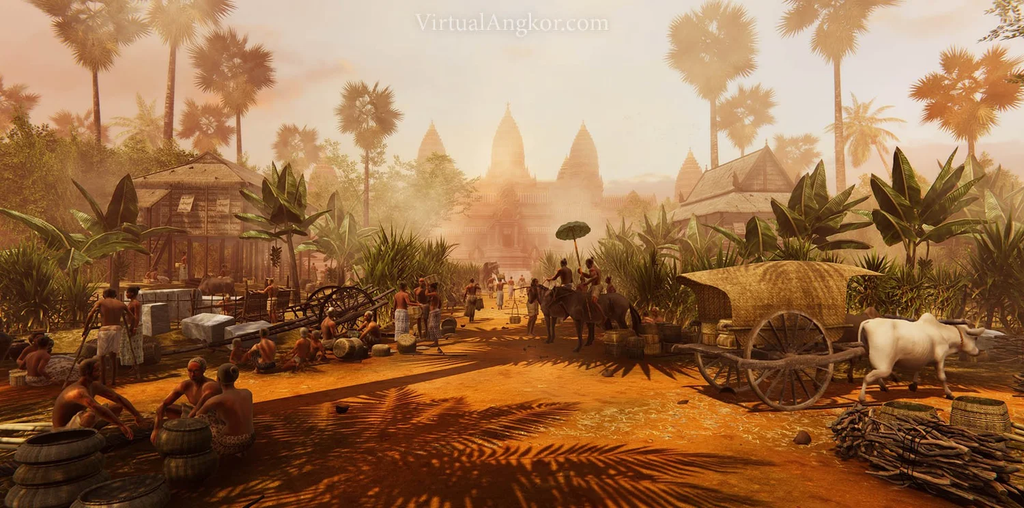
The Digital Humanities project that I found particularly fascinating and explored was the Virtual Angkor project. Virtual Angkor is a Digital Humanities project designed for the classroom that uses 3D modeling, archaeology, historical research, and digital technology to reconstruct the ancient city of Angkor in Cambodia. The project allows users to explore the city through VR and gain a better understanding of its architecture, landscape, and everyday life.
Sources
The project utilized a wide range of sources, including different types of historical and archaeological evidence, such as Khmer inscriptions, Zhou Daguan’s eyewitness account, French photographs and sketches, temple bas-reliefs, and archaeological maps and surveys. I think the variety of these sources is one of the strongest aspects of the project because they allow Virtual Angkor to cover both the architectural and physical aspects of Angkor as well as the everyday lives of the people who lived there. By combining evidence about buildings, landscapes, culture, and daily activities, the project provides a very holistic reconstruction of Angkor rather than focusing on just one aspect of the city.
Technology and Process
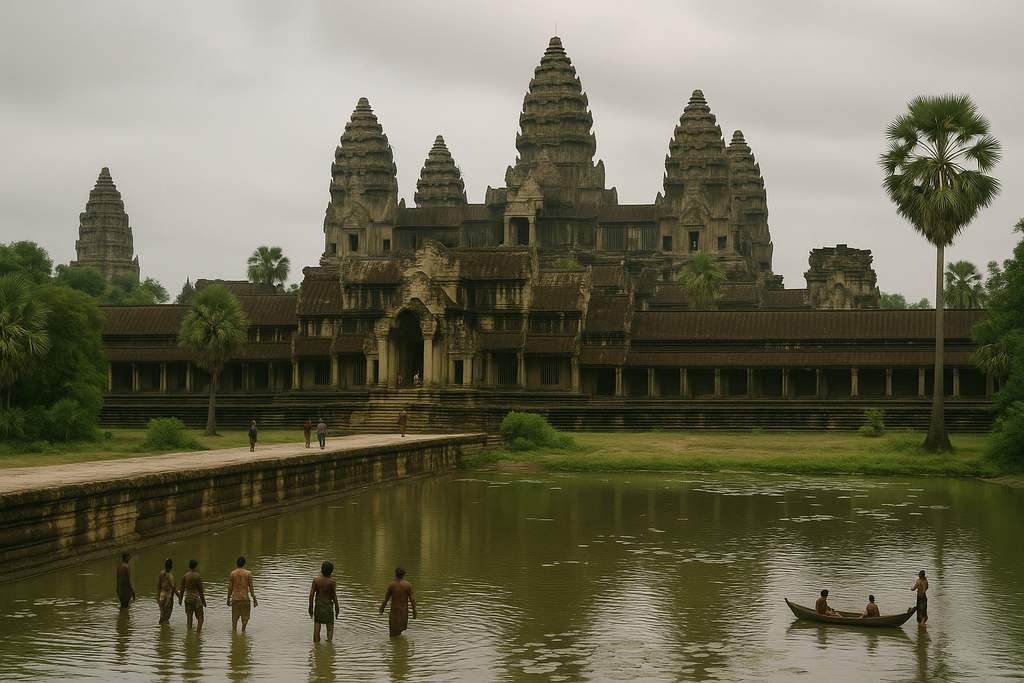
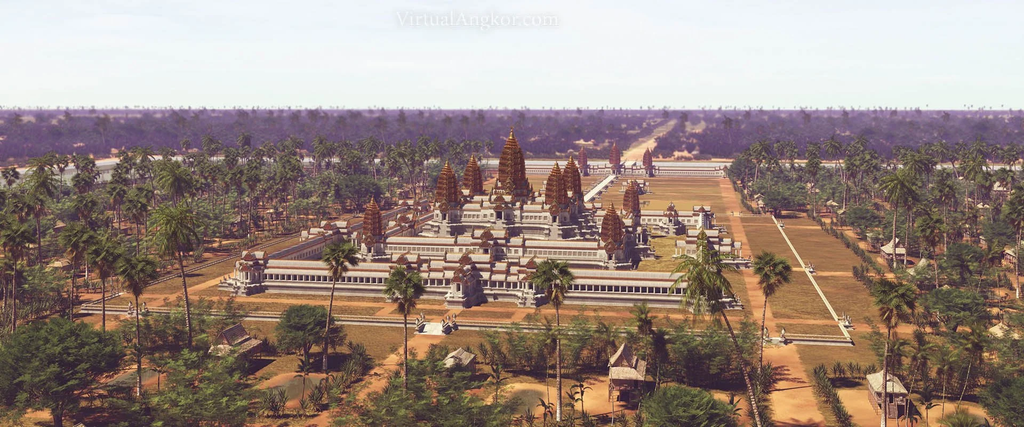
With all the sources gathered, the team transformed historical and archaeological sources into an interactive model using 3D modeling, GIS, LiDAR, and animation. GIS helped organize the locations of buildings, roads, canals, and other features. LiDAR provided detailed information about Angkor’s landscape and archaeological remains. The team then combined these data with 3D models in Unity, using game AI to control virtual characters and simulate their movement and activities. The project also compares its historically researched reconstruction with generative AI images, showing that AI can produce realistic-looking images while still including historically inaccurate details. This highlights the importance of combining new technology with historical research and human interpretation.
presentation and further question
The project presents its research through a combination of interactive maps, 3D visualizations, virtual environments, animations, and VR experiences. By combining these different forms of presentation, Virtual Angkor allows users to explore both the physical landscape of Angkor and the everyday activities of its people in an immersive way. However, considering the large amount of time, resources, and funding required to create such a detailed project, I wonder if it could be applied beyond classroom teaching. Could it, for example, be used in libraries or museums and allow the general public to freely explore the virtual city and learn about Angkor at their own pace?