While I was initially skeptical, computationally analyzing textual data does have its benefits. Being able to use digital methods such as mapping common themes and identifying trends within a text introduces many helpful, new ways of looking at works of literature. However, there are some cautions we should be aware of as we proceed into this digital age—AI is not perfect, and while we can certainly utilize its outputs as tools for understanding, we should not interpret them as unquestionable fact.
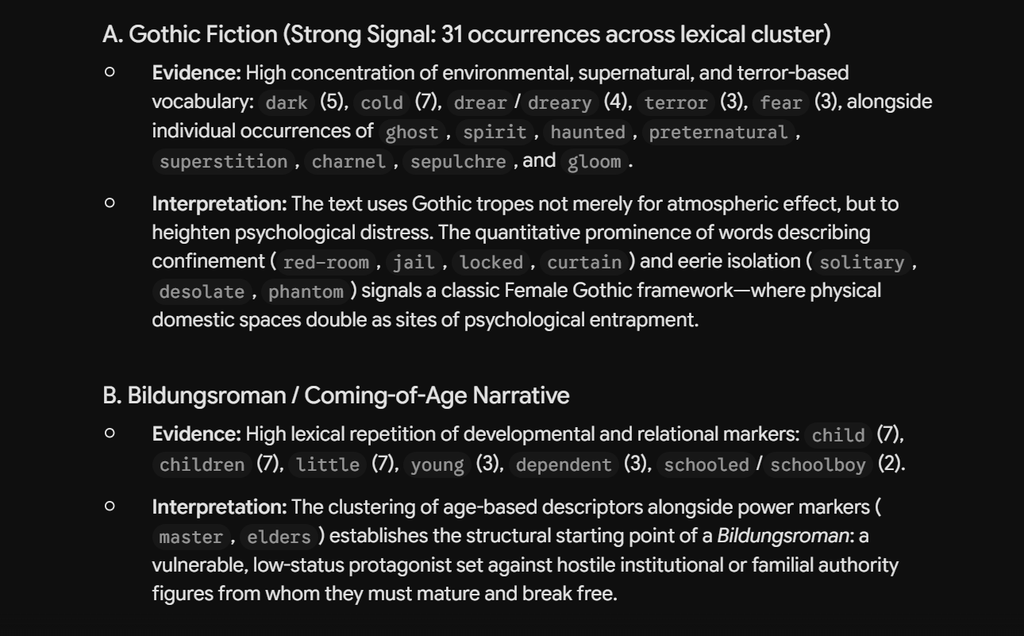
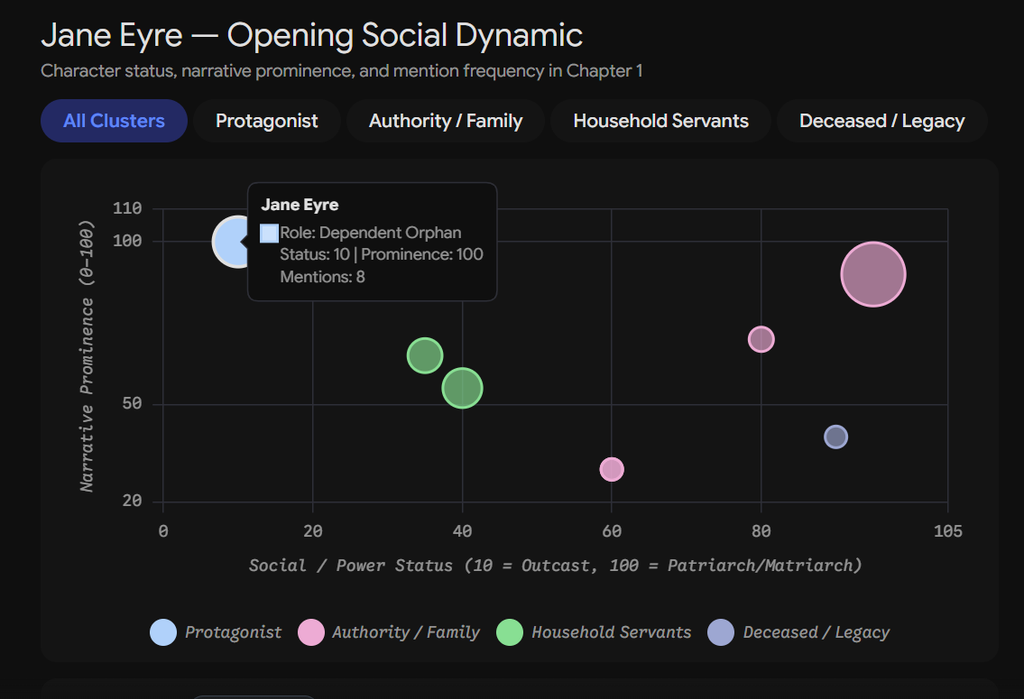
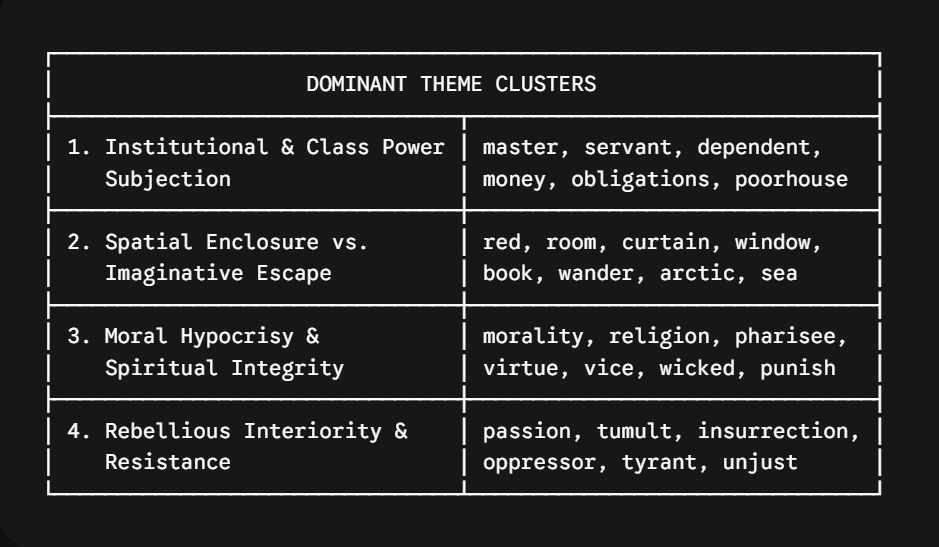
I did two distant readings of Charlotte Brönte’s Jane Eyre, which can be downloaded as a .txt file for free at the Project Gutenberg site. For my first close reading, I tried out the Google Gemini AI tool. One issue I ran into was that the entire text was too long for the AI to process all at once, so I had to compromise and input just the first few chapters. Given this, I was impressed with how accurately the AI was able to identify the genres and theme clusters; however, the missing data did cause large themes and social dynamics—such as the famous romance between Jane and Mr. Rochester—to be left out from the AI’s visualization.
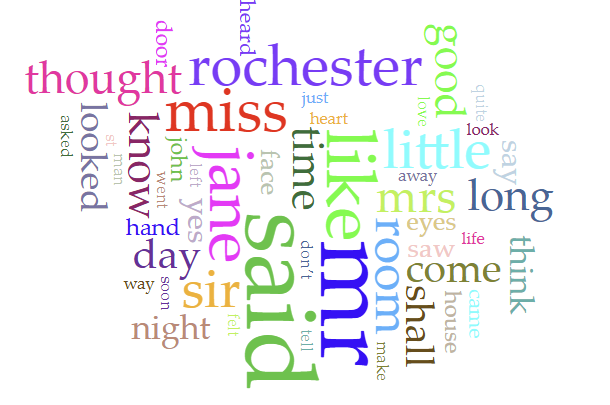
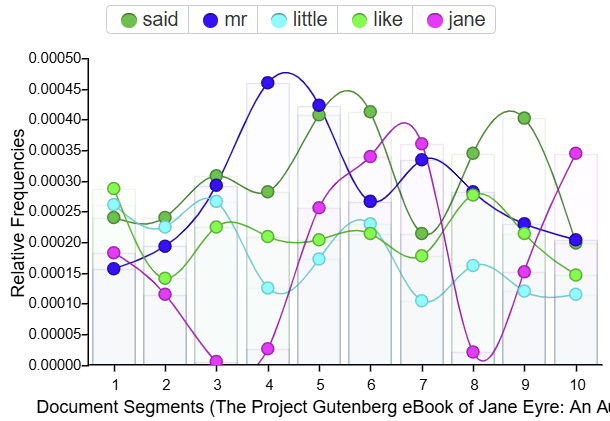
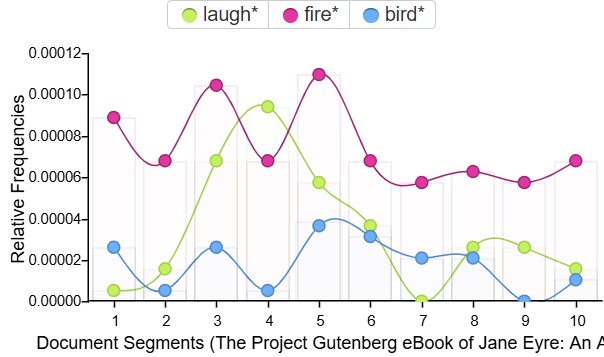
Then, I went back to Voyant Tools and explored some of the tools there. I found the trend line graphs to be very helpful for mapping common characters and themes; however, the automated ones that just used the most common words didn’t really succeed at representing the text. I found it more helpful to use my own human judgement and manually input some of the most important symbols from Jane Eyre, such as “fire” and “laugh.” By focusing on something specific and traceable, I was able to learn something more substantial about the text from the line graphs it provided me.
Overall, it is imperative to be cautious while using AI and digital tools to analyze textual data; the visualizations and outputs they generate are not always fully accurate to the original text. They may miss important themes or information, or simply not be able to process the entirety of a text. However, if we combine these tools with our own critical thought, we truly could learn more about textual analysis and data, and discover new ways of looking at literature that we haven’t seen before.