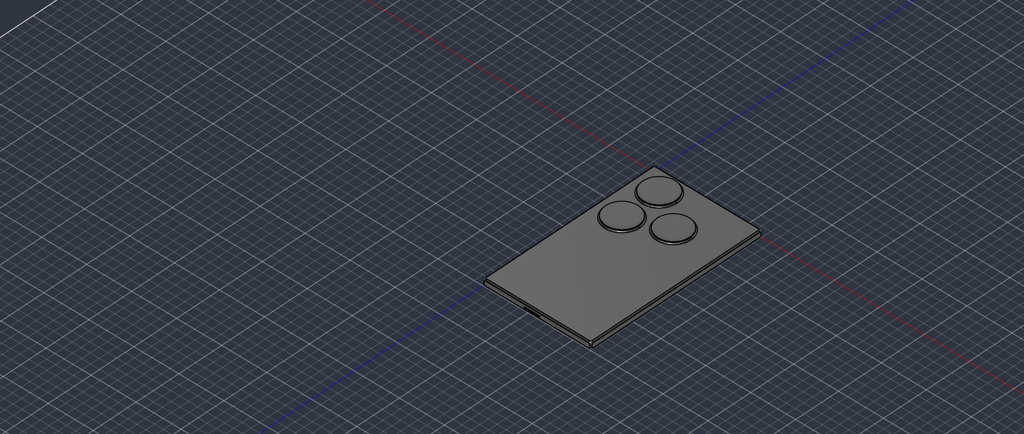
In this assignment, I have chosen an iPhone as my model. I first thought that the phone would be quite easy to model because of its rectangular shape. However, modeling it became a bit difficult due to its intricate detailing.
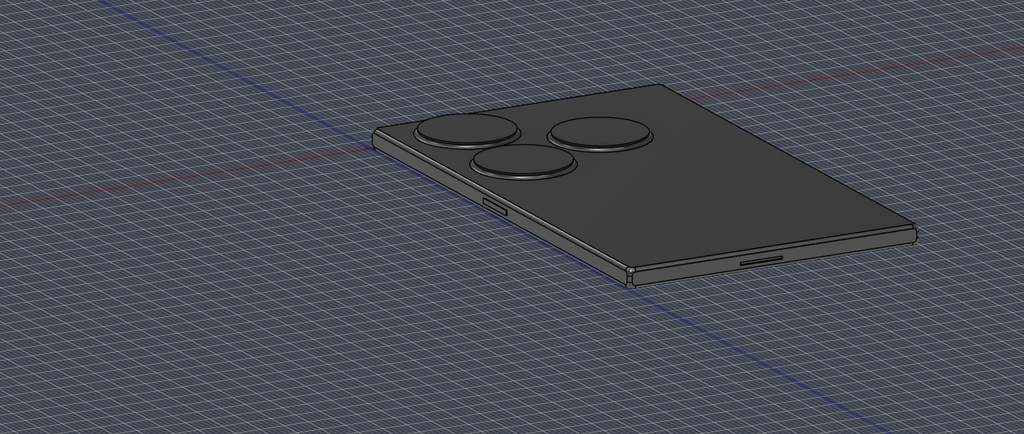
Constructing the general form of the phone was not difficult, but it was challenging to add and position the minor details, including the cameras, buttons, and the charging point. I had to make certain tradeoffs since I couldn’t accurately recreate every detail of the actual iPhone due to the technical constraints of the program.
I believe that 3D modeling might be particularly useful in the field of humanities to recreate historical artifacts, buildings, and other places. Historians would be able to reconstruct a historical building that does not exist anymore and allow students to see how it used to look like. Another possibility would be creating 3D models of delicate museum artifacts to study them without damaging the original items. Such models could be made available online to enable access to historical objects and sites to people who cannot visit them in reality.
Tip: Frequently use Undo (Ctrl+Z). Whenever I had a problem with placing or sizing an object, it was far easier for me to undo the previous step rather than fix the problem.
The undo tip is one I wish I knew before I began my model. My mug’s handle kept clipping into the body, and I fought the geometry instead of reversing the step, in the same way you did with the camera and buttons. Your modeling museum is a fantastic idea; would love to see some examples of them. Letting someone study a fragile object without touching it changes who gets access to it, including people who could never travel to see the original in person.